
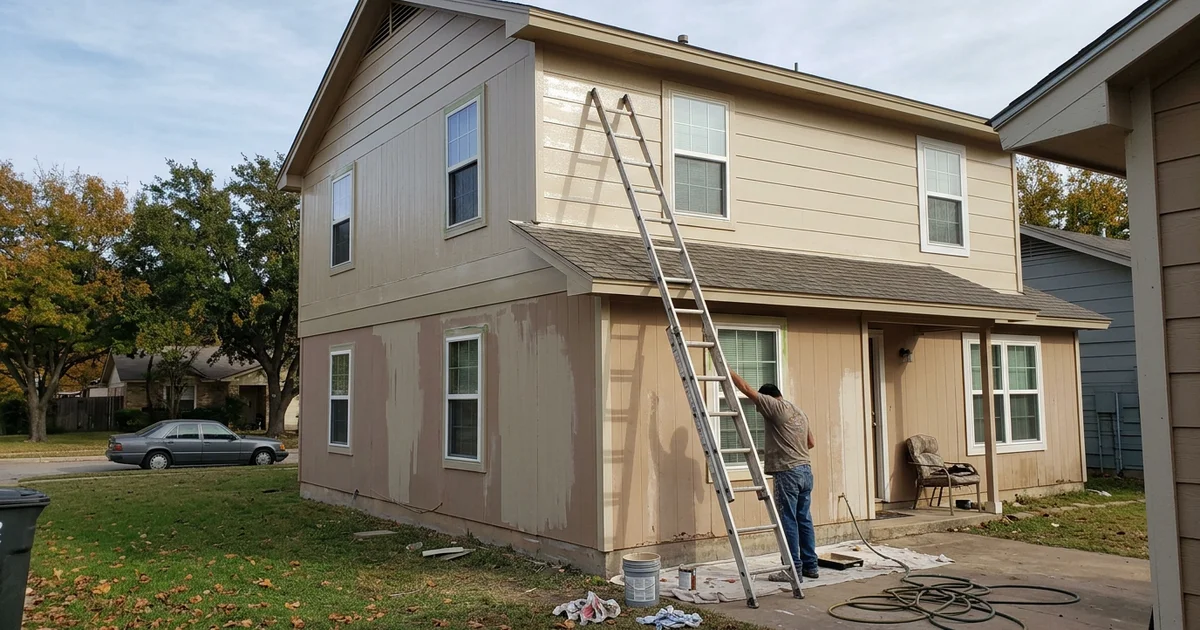
We hear the exact same question from nearly every homeowner looking at faded siding: how often to paint house exterior Texas properties?
You know how quickly the sun can bake the life out of a brand new finish. It is a common frustration across the state.
Our Austin exterior painters usually see homes coming due on the ranges below.
Let’s look at the data, what it is actually telling us, and explore practical ways to respond.
The Short Answer
There is no single number for paint lifespan, because it depends heavily on your siding material and sun exposure. The average exterior paint lifespan Texas homes achieve sits right around 5 to 10 years.
We find that paint on the body of the house lasts longer than paint on the trim. Sunny walls wear out much faster than shady ones.
Typical Repaint Intervals by Surface
These are general ranges for Texas homes painted with good prep and a quality 100% acrylic exterior paint, such as Sherwin-Williams Emerald or Benjamin Moore Aura:
| Surface | Typical interval | Notes |
|---|---|---|
| Wood siding | About 5 to 7 years | Moves with heat and moisture, so paint works hard |
| Wood trim, fascia, soffits | About 4 to 6 years | Takes water and sun at the roof edge |
| Fiber cement siding | About 10 to 15 years | Very stable, like James Hardie board, holds paint well |
| Stucco (acrylic paint) | About 8 to 12 years | Crack repair is the key to longevity |
| Stucco (elastomeric) | Often 10 years or more | Flexible film bridges hairline cracks |
| Doors and shutters | About 3 to 5 years | Small, easy refresh jobs |
Our teams notice these ranges shift significantly based on exposure, color, and prep quality. When clients ask about repaint stucco how often schedules, we point out that elastomeric coatings bridge hairline cracks to last over 10 years. A dark color on a west wall will need attention much sooner than a light color on a north wall.
How Sun Exposure Shortens the Cycle
Central Texas UV is intense. Austin frequently sees the UV index hitting 10 to 12 during the peak summer months. This extreme radiation breaks down the binder in paint, which leads to fading and chalking.
We see heat making boards expand and contract daily, stressing the paint film over time. Dark colors absorb more heat than light ones. As a result, one house can age very unevenly. It is common for the west side to look tired while the north side still looks fine.
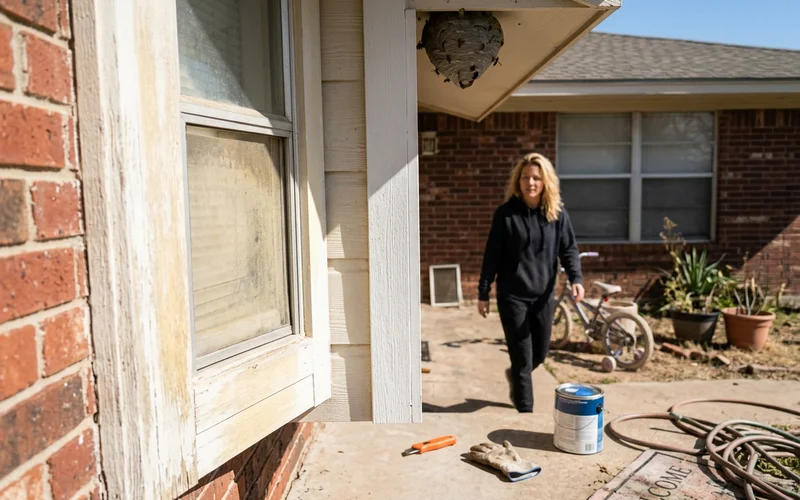
If that sounds familiar, you have options. We are happy to quote partial repaints for the hardest-hit sides or the trim on a shorter cycle. The guide on why paint fails in Texas heat explains exactly what is happening to the paint chemically.
Other Things That Shorten Paint Life
- Skipped prep: Paint over chalk or loose paint fails early, no matter the product.
- Failed caulk: Water behind the paint causes peeling and blistering.
- Sprinklers hitting walls: Constant wetting breaks down paint near the ground.
- Overhanging trees: Shade helps with UV but adds mildew and debris.
- Cheaper paint: Lower-grade products lose color and flexibility faster than premium 100% acrylic options.
Our crews often spend just as much time prepping a house as they do applying the final color. Thorough washing and scraping give the new coat a solid foundation to bond with.
The Best Time of Year to Paint in Central Texas
The best time to paint exterior Austin buildings is during the mild months of fall and spring. Paint cures best within its label temperature range, which is usually between 50 and 85 degrees Fahrenheit.
Our painters look for days when humidity is not extreme and overnight temperatures remain stable. In Austin and the surrounding Hill Country, that usually means:
- Fall (roughly October and November): Often the most comfortable window, with milder days and lower humidity.
- Spring (roughly March through May): Good conditions, though spring storms can cause short delays.
- Summer: Doable with early starts, painting each side when it is in shade, and avoiding surfaces that are too hot to touch.
- Winter: Mild days work, but cold snaps and overnight lows can limit which days we can safely paint.
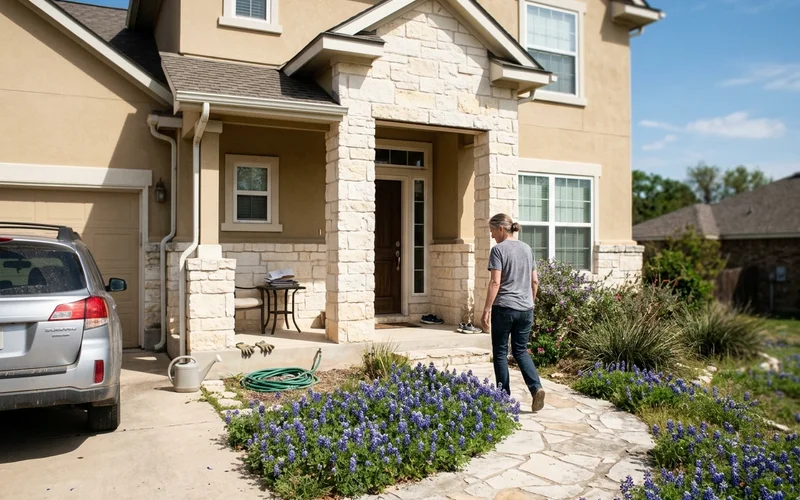
Plan ahead in HOA neighborhoods
If your HOA needs to approve colors, start that process a few weeks before you want painting to begin. Our guide to HOA color approval explains the usual steps.
Signs You’re Due Sooner
Do not wait for the calendar if you see peeling, bare wood, split caulk, or heavy chalking. Those are visual cues the paint has stopped protecting the surface beneath it.
Our estimators look for these specific early warning signs during every property walk. Catching wear early keeps the next job a standard repaint instead of an expensive siding repair project.
Check for these specific indicators:
- Powdery residue left on your hand after rubbing the siding.
- Hairline cracks forming around window frames and trim.
- Peeling spots on the lower boards near the soil or mulch.
- Faded patches on the south-facing walls.
The checklist of signs your exterior needs repainting covers what else to look for.
Color Choice Changes the Clock
Two identical houses painted the same day can age very differently based on color. Darker body colors absorb more heat, which can speed up fading and cause blistering on some wood surfaces.
We always check a color’s Light Reflectance Value, or LRV, before starting a sun-exposed project. Certain bright pigments fade faster under heavy UV radiation. Lighter neutrals and earth tones usually hold up the longest in the intense Central Texas sun.
| Color Type | Light Reflectance Value (LRV) | Heat Absorption | Fade Risk |
|---|---|---|---|
| Whites & Creams | 70 to 100 | Very Low | Minimal |
| Light Grays & Tans | 40 to 69 | Low | Low |
| Deep Blues & Browns | 10 to 39 | High | Moderate |
| Blacks & Dark Greens | 0 to 9 | Very High | High |
That does not mean you cannot use a bold color. It just helps to know the trade-off.
Our designers often suggest a deep color for a shaded porch or front door to make a statement. The west-facing wall then gets something lighter to prevent premature fading.
Partial Repaints Can Make Sense
You do not always need to repaint the whole house at once. Targeting the worn areas saves money and extends the life of your original investment.
We frequently perform partial jobs for clients looking to boost curb appeal quickly and affordably. Common partial jobs include:
- Trim, fascia and soffits only, when the body still looks good.
- The west and south sides, if they are failing years ahead of the rest.
- Doors and shutters, for a quick exterior refresh.
The catch is color matching. Faded paint on the untouched sides will not match fresh paint perfectly.
Our project managers will tell you honestly whether a partial job will look right on your home. Slight variations on trim and doors are usually fine, but large body walls can show the difference clearly.
Keep a Simple Maintenance Log
Note the date, colors, products, and sheens used on each paint job, and keep your quote. This practice helps you plan the next repaint and makes color matching for touch-ups very easy.
We recommend storing your paint codes digitally in a phone note or email folder for quick access. A physical folder with the original contractor invoice also works well for future warranty questions. Labor warranties usually last two to five years, while premium paint materials might carry a limited lifetime guarantee from the manufacturer.
Making Paint Last Longer
The best way to stretch the interval is to start right with thorough washing, scraping, caulking, and priming. Follow that up with two coats of a premium paint chosen specifically for heat and UV resistance.
We suggest a quick walk-around once a year to touch up small spots and re-caulk any gaps. A gentle soft-wash every two years also removes dirt and mildew without damaging the finish. This simple maintenance keeps water out and buys you more time between full repaints.
When you are ready for an honest read on your house, schedule a walk-through with a professional.
Our team will inspect the property with you and outline which sides need work now and which can wait.