
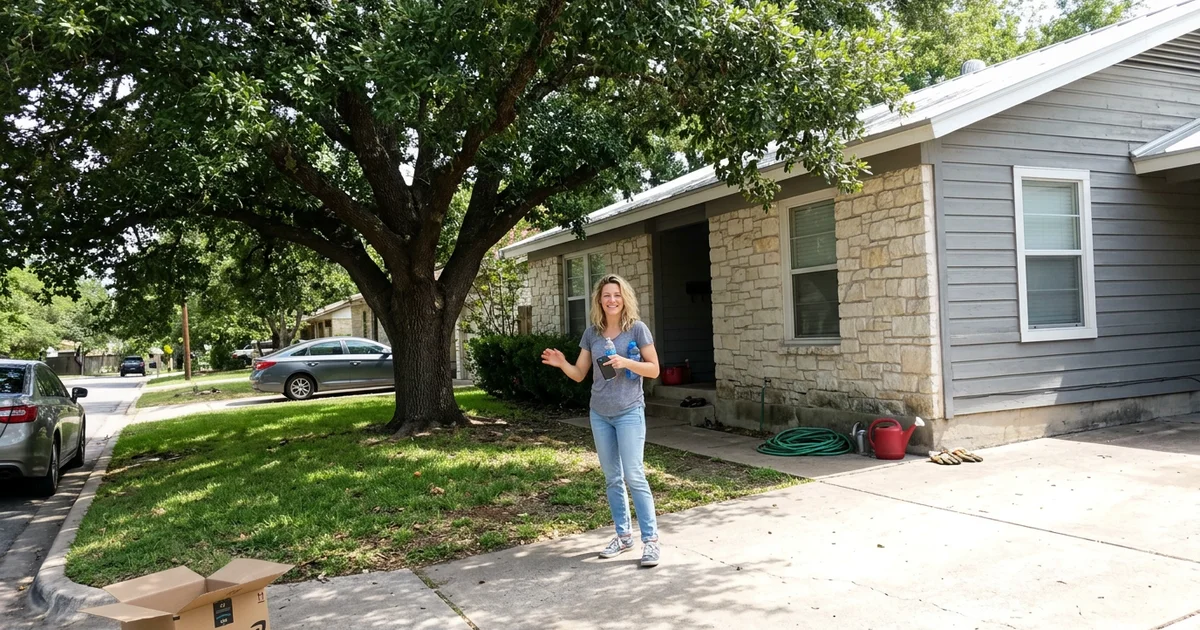
A Common Central Texas Question
We see homeowners struggle with mixed-material exteriors constantly.
A lot of homes around Austin mix natural limestone or brick with painted siding and trim. You might be deciding whether to paint or limewash limestone brick to achieve a more modern look. Our general advice leans toward painting around limestone, rather than coating it directly.
That approach avoids ongoing maintenance, but the right choice always depends on your specific goals. Let us walk through the data, compare the real costs, and outline the best options for your exterior.
Option 1: Leave It Natural
We recommend keeping the masonry completely bare for maximum durability. Natural limestone and brick need almost no maintenance over their lifespan. They do not peel, fade much, or require recoating.
Our clients often avoid the average $4 to $8 per square foot cost of exterior brick painting simply by leaving the stone as the builder intended. That alone saves property owners significant money over time. This approach also guarantees the facade handles the local climate perfectly.
Pros
- Zero ongoing paint maintenance
- Masonry breathes exactly the way it was designed to
- Retains the regional character many buyers look for in the 2026 real estate market
- Keeps decisions fully reversible for the rest of the exterior
Cons
- The existing stone color limits your secondary palette choices
- Certain older brick tones can be difficult to modernize
Our color consultants use body and trim colors that harmonize with the stone’s natural undertones. You can find exactly how to do this in our guide on pairing colors with stone. Finding the right balance transforms the entire property.
Option 2: Limewash
We see a massive demand for the European, lived-in look across modern farmhouse builds. Limewash offers a soft, chalky finish that bonds chemically with the brick. It is a traditional coating made from slaked lime and water.
Our team knows that quality products, like Romabio Classico Limewash, boast a vapor permeability rating of less than 0.01 meters. The mixture soaks into porous masonry and cures through a process called carbonation. This means the finish actually becomes part of the stone instead of sitting on top.
Pros
- Incredible breathability allows moisture to escape easily
- Creates a soft, mottled patina that ages beautifully
- Erodes gradually over a 5 to 7 year span rather than peeling in sheets
- Material costs are generally lower than premium paint
Cons
- Requires a maintenance refresh coat every few years
- Final results depend heavily on the original masonry’s porosity
- Dense or heavily sealed stone does not absorb the lime properly
We want to be perfectly clear that Bluebonnet Ridge does not offer limewash services. This technique is simply a great option worth keeping on your radar. Local specialists can handle the application if you choose this route.
Option 3: Paint
We handle these exterior updates carefully because understanding painting brick pros and cons requires specialized knowledge. Applying a solid coat of paint delivers the most dramatic exterior change. Painting masonry covers outdated colors entirely and unifies mismatched additions. In many neighborhoods it also needs sign-off first, so check how HOA exterior paint color approval works before you commit.
Our standard procedure demands a high-quality mineral silicate paint or breathable elastomeric coating like Sherwin-Williams Loxon. Standard acrylic house paint acts like a plastic bag on porous Texas limestone. That trapped humidity quickly leads to bubbling and ruined brick faces.
Pros
- Delivers a complete, uniform color transformation
- Modernizes outdated or visually busy brick patterns instantly
- Unifies mismatched masonry from different building phases
Cons
- Stripping paint from textured stone is incredibly slow and expensive
- Creates a new surface that will need repainting indefinitely
- Using the wrong acrylic product traps moisture and causes spalling
- Peeling sections on a rough surface are very difficult to patch neatly
Moisture and Breathability
We constantly remind property owners that sealing these surfaces incorrectly causes severe damage. Masonry relies on a natural vapor exchange to stay intact. Water vapor constantly moves through porous materials like brick and mortar.
Our local climate experiences heavy humidity, making product selection critical. Using a heavy acrylic traps moisture and creates three distinct problems. These failures require expensive remediation.
- Spalling, where the face of the brick pops off entirely
- Bubbling paint layers caused by trapped vapor
- Deep structural mold growth within the mortar joints
We recommend true masonry paints because they feature microporous crystalline structures. These tiny pores let vapor flow out but prevent wind-driven rain from soaking in. Keeping the wall dry prevents expensive structural repairs later.
Watch for Efflorescence
We often spot a white, powdery deposit near the foundation line or below poorly maintained gutters. These salty crusts are known as efflorescence. According to recent US Environmental Protection Agency data, nearly half of American homes experience some type of moisture intrusion.
Our crews know that water travels through the brick, dissolves natural salts, and leaves them on the surface as it evaporates.
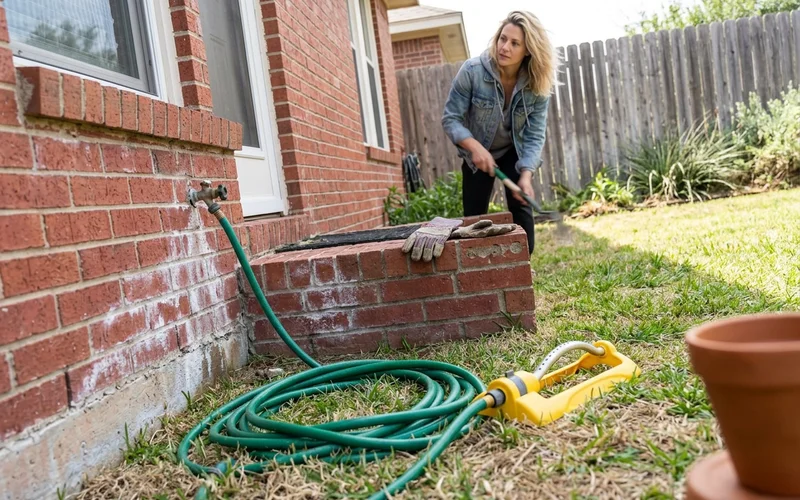
Applying any coating over efflorescence without fixing the water source guarantees a failed paint job. The salts will keep migrating and eventually push the new primer right off the wall.
We always check sprinkler heads and foundation grading before recommending a full masonry paint application. Stopping the water is the only permanent fix. A simple gutter repair often solves the underlying issue.
Side-by-Side Comparison
We built this table to clarify the limewash vs paint debate using objective data. Choosing the right finish comes down to maintenance, cost, and vapor permeability. Review the data before committing to a permanent exterior change.
| Feature | Leave natural | Limewash | Paint |
|---|---|---|---|
| Look | Original stone or brick | Soft, matte, mottled | Solid, uniform color |
| Breathability (Sd Value) | Full (< 0.01m) | High (< 0.01m) | Varies (0.1m - 0.3m typical) |
| Maintenance | Minimal | Refresh every 5-7 years | Repaint cycle like siding |
| 2026 Cost Estimate | $0 | $3 - $6 per sq. ft. | $4 - $8 per sq. ft. |
| Reversible | N/A | Partly, power-washable early | Very difficult |
| Risk | Low | Low to moderate | Moderate if moisture issues |
| Offered by us | Yes, we paint around it | No | Case by case |
The Middle Path: Coat Only the Trim
We prefer this strategy because it highlights the natural texture without adding maintenance headaches. The most cost-effective upgrade is keeping the stone bare while painting the surrounding accents. Fresh siding, crisp trim, and a clean fascia board make the whole property pop.
Our painters mask the stone carefully before cutting in by hand.
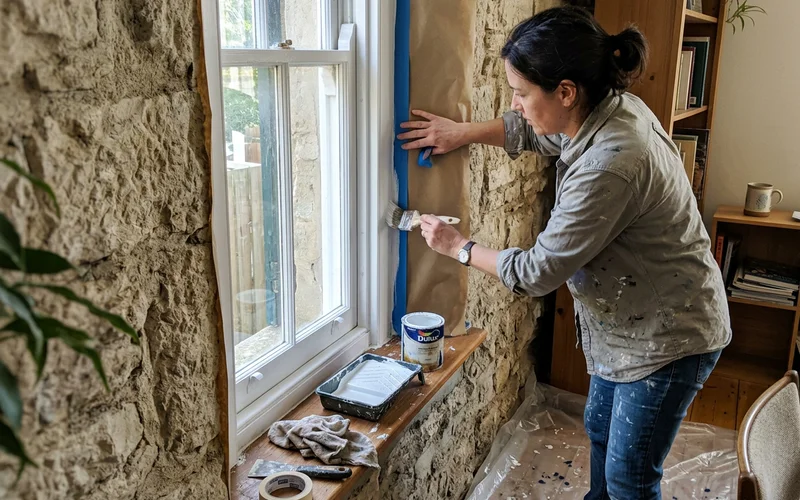
This ensures a razor-sharp line where the window trim meets the rough limestone. Clean edges make an old facade look intentional and high-end.
If You Do Want to Paint Masonry
We follow a strict set of steps before applying any color. A successful masonry paint job requires exhaustive surface preparation. Cutting corners on the prep work leads to peeling within the first 18 months.
Our standard process for clients asking should I paint limestone includes a few mandatory preparation phases. The project must start with thorough soft-washing and chemical efflorescence removal. Correcting any active moisture sources or drainage issues is the next critical step.
- Repairing cracked mortar joints to create a sound surface
- Applying a specialized bonding agent like ROMABIO Biogrip Micro Primer
- Finishing with two coats of a breathable mineral topcoat
We will walk the property with you and discuss the risks honestly. Sometimes the stone is just too soft for a coating. A professional assessment prevents costly mistakes down the road.
Cleaning Stone Before Painting Around It
We always include a gentle wash for the brick sections bordering the new trim. Washing the masonry enhances the look of your newly painted siding. Even if the stone stays natural, dirt and mildew drag down the overall curb appeal.
Our crews rely on low-pressure soft washing and specialized detergents to melt the grime away safely. High-pressure blasting is a huge mistake. A pressure washer running over 1,000 PSI can easily blow the old mortar right out of the joints.
We find that clean stone sitting next to fresh paint makes the entire house look ten years younger. The contrast between crisp trim and bright masonry is stunning. Proper cleaning ensures the new finish takes center stage.
Choosing Trim Colors for Stone Homes
We rely on a few proven guidelines to manage tricky undertones. The right accent color determines whether your exterior looks cohesive or mismatched. Getting the trim right is where most stone homes win or lose the curb appeal battle.
Our designers insist on testing physical samples against the actual masonry. You must look at the color swatches outside during different times of the day. The changing sunlight drastically alters how the paint appears.
- Creamy or tan limestone pairs beautifully with warm whites like Benjamin Moore Swiss Coffee.
- Gray or cool limestone demands cleaner whites or subtle, cool-toned slates.
- Red or orange brick looks sharp against a deep anthracite or dark charcoal trim.
- Mixed stone palettes benefit from a mid-tone greige that bridges the warm and cool elements.
We recommend reading our detailed guide on choosing colors in Central Texas to see the exact process. A methodical approach prevents expensive color mistakes. Taking your time here guarantees a beautiful final result.
Our Take
We love bringing out the best in these homes with carefully chosen accent colors. Natural stone is one of the greatest architectural features of any Central Texas property. In most situations, keeping it bare and updating the trim is the smartest financial move.
We will bring physical samples right to your door and hold them against your actual walls. It helps immensely to see the options in your specific lighting.
Contact our team today to schedule a site visit and get a customized exterior plan.