
Why There’s No Single Price
We hear the same frustration from property owners every week. Getting a straight answer about the exterior house painting cost in Central Texas feels impossible. You will usually see a standard home range anywhere from $3,500 to $9,500.
This massive spread exists because an exterior job is almost entirely labor. Your final number depends heavily on square footage, home height, and exactly how much surface preparation your siding needs.
Our team created this guide so you can analyze any quote with total confidence.
Read through our Austin exterior painting prices to see how our fixed quotes work and protect your budget.
The Main Cost Drivers
Seven main variables dictate your painting bill. Square footage and prep condition easily lead the pack in determining your total investment.
1. Square Footage
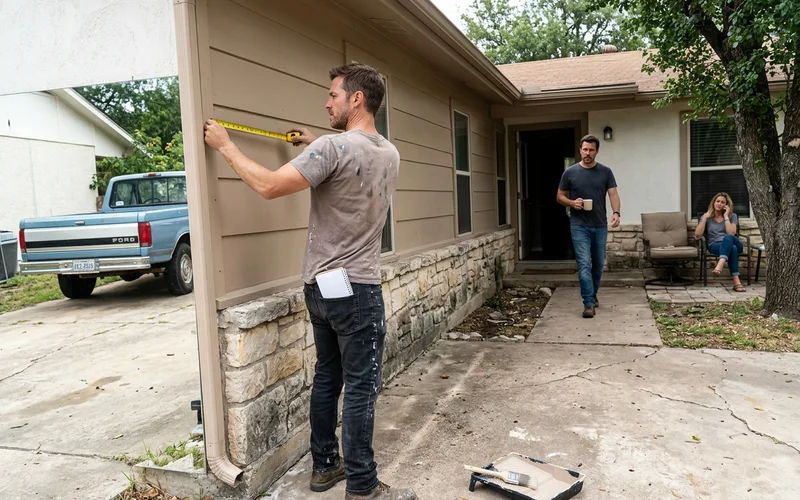
Labor and material costs scale directly with your home’s total paintable surface area. Painters measure the exterior walls rather than just the interior living space. A 2,000-square-foot interior often means 2,500 square feet of actual siding and trim.
One gallon of premium paint typically covers 300 to 400 square feet. Details like gables, elaborate trim, and deep eaves require slow brushwork that increases the hours on site.
2. Number of Stories and Access
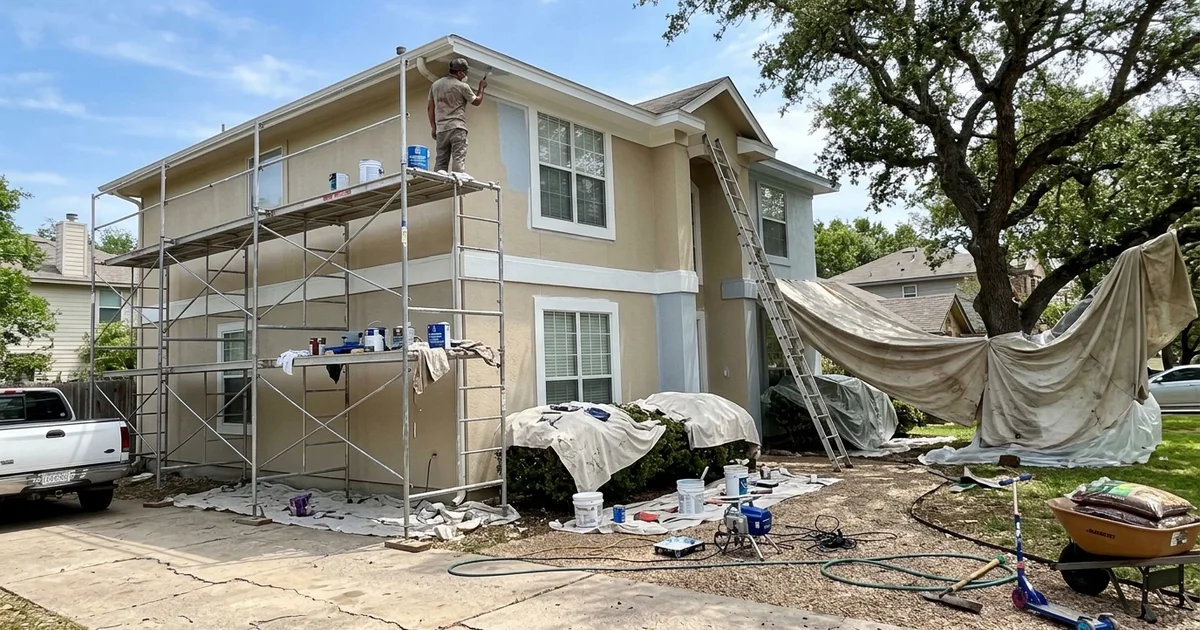
Multi-story homes cost up to 50 percent more to paint due to the extra labor and safety equipment required. A standard single-story ranch goes quickly because the crew stays on the ground. Taller structures require extension ladders, scaffolding, or even boom lifts.
Our crews spend significantly more time just safely moving equipment on a two-story home. Steep lots in places like Lakeway or Bee Cave multiply this difficulty. Tight property lines also restrict ladder placement and force slower, careful work.
3. Substrate (What the House Is Made Of)
Your siding material determines the required prep techniques and exactly how much paint the walls will absorb.
- Fiber cement: Hardie board is stable and takes paint extremely well. This material is usually the most efficient to paint.
- Wood siding: Texas heat causes wood to shrink and swell. This material needs intensive scraping, sanding, and spot priming as it ages.
- Stucco: Porous and heavily textured walls act like a sponge. Stucco requires specialized heavy-duty coatings, and cracks need careful repair.
- Mixed materials: Stone, brick, siding, and stucco on a single facade present a challenge. The crew must perform extensive masking and hand-brushing around the transitions.
4. Prep Condition
Surface preparation is the largest variable in any quote, and it often takes longer than the actual painting. A well-maintained home just needs a pressure wash and minor touch-up caulk.
Neglected siding with heavy chalking, widespread peeling, or failed caulk joints demands days of scraping. Wood rot is a common and expensive surprise.
Replacing damaged wood fascia boards across the US averages $14 to $22 per linear foot. You can learn exactly what prep adds to your timeline by reviewing our detailed breakdown.
5. Stucco vs Siding, and Elastomeric Coatings
Stucco homes often require specialized elastomeric coatings that apply up to ten times thicker than standard paint. Expansive clay soils in Texas cause constant structural movement. This shifting creates hairline cracks across rigid stucco surfaces.
We recommend using a high-build elastomeric product to bridge these tiny gaps. Our guide to elastomeric coatings for stucco covers when they’re worth the extra cost. Elastomeric coatings solve three main stucco problems:
- Bridges hairline cracks up to 1/16 inch wide.
- Waterproofs the porous cement surface against wind-driven rain.
- Flexes with structural movement caused by expansive clay soils.
Standard acrylic paint goes on at 3 to 5 mils thick. Elastomeric coatings build up to 20 mils, which creates a flexible and waterproof membrane. This thick specialty material and the intense labor required to roll it on will naturally push your stucco painting cost higher.
6. Product Line
Premium paints cost more upfront but deliver far better color retention and UV protection. Central Texas sun destroys cheap builder-grade paint fast. Our team strongly advises upgrading to top-tier 100 percent acrylic latex formulas.
A product like Sherwin-Williams Emerald exterior paint costs around $85 to $120 per gallon at retail. The investment pays off because the film resists fading and chalking for years longer than budget options. High-end products often include self-cleaning technology to wash away dirt during rainstorms.
7. Number of Colors and Details
Every additional color in your design scheme increases the labor time and total cost. A monochromatic body and trim package moves fast.
Adding contrasting colors for window sashes, doors, and shutters requires precise cutting in with a brush. Masking off different colored sections takes hours of extra tape work. Keep your palette to two colors if you want to optimize your budget.
Cost Drivers at a Glance
The table below summarizes the key variables that increase your final bill.
| Driver | Pushes cost up when… |
|---|---|
| Square footage | Large home, lots of detailed trim, and extra gables |
| Stories and access | Two stories, steep lots, and tight side yards |
| Substrate | Old wood siding, porous materials, and textured stucco |
| Prep condition | Heavy peeling, severe chalking, failed caulk, and wood rot |
| Coating type | Elastomeric applications on stucco (up to 20 mils thick) |
| Product line | Premium paints like Sherwin-Williams Emerald |
| Colors and details | Multiple colors and detailed accent trim |
Fixed Quotes vs Change Orders
A detailed, fixed quote protects you from unexpected price hikes after the job starts. Some contractors secure jobs with artificially low bids to win the contract. They return later asking for hundreds of dollars in change orders for basic scraping or spot priming.
Our estimating process eliminates these surprises by providing one guaranteed price upfront. A fixed quote means the final number will not change unless you specifically request additional work or approve hidden damage repairs. Every Bluebonnet Ridge quote operates on this transparent model.
Compare scope, not just price
Line up bids and compare prep steps, products, coats, and warranty details. The lowest number is often the one with the least prep work, and prep decides exactly how long the paint lasts.
How to Read an Exterior Quote
A professional exterior painting quote must clearly detail every step of the process and every product used. A good quote should tell you:
- Surfaces included: Body, trim, fascia, soffits, main doors, garage doors, and shutters.
- Prep steps: Pressure washing, hand scraping, caulking, priming, and specific carpentry repairs.
- Products: The specific brand, product line, and sheen for each surface (like Sherwin-Williams SuperPaint satin).
- Number of coats: Clear specification of primer and topcoats.
- Colors: The exact shades or the deadline for when they will be finalized.
- Schedule: The firm start date and expected duration of the project.
- Payment terms: Deposit requirements and final payment schedules.
- Warranty: The exact length in years and what failures it covers.
If a contractor leaves any of these details out, ask for revisions before you sign anything.
Why We Don’t Publish a Price List
Flat rate pricing cannot account for the unique condition and access challenges of your specific property. Giving a blanket cost to paint house exterior texas homes is a disservice to the customer. We need to evaluate the failed caulk, measure the roofline height, and check for wood rot.
An over-the-phone square footage number ignores the very factors that move the price. Our estimators visit your property within 48 hours to measure and look closely. You receive one fixed number in writing after this thorough inspection.
Hidden Costs to Watch For
Lowball bids often exclude essential steps like carpentry repairs, full priming, and proper property protection. When a bid seems suspiciously low, check whether it leaves out these common upcharges:
- Rotten wood repair: Replacing fascia, trim, or siding averages $14 to $22 per linear foot.
- Caulking: Some crews only do spot caulking instead of sealing all open exterior joints.
- Primer: Skipping primer on bare wood or newly repaired areas guarantees premature peeling.
- Second coat: Many cheap bids skip the second finish coat entirely.
- Doors and shutters: Accent items like garage doors often get billed as extras.
- Property protection: Moving and protecting expensive landscaping, patio furniture, and cars takes time.
A trustworthy quote either includes these items in the base price or lists them clearly as optional add-ons.
How Long an Exterior Paint Job Takes
A standard single-story repaint takes three to five days, while complex multi-story homes can take up to two weeks. The weather dictates our schedule just as much as the home size. Humidity levels in Texas must stay low enough for the water-based paint to cure properly.
Applying an elastomeric coating on a large stucco home will stretch the timeline considerably. These highly specialized thick coatings require much longer drying periods between passes to ensure a watertight seal.
Ways to Manage Your Exterior House Painting Cost in Central Texas
Strategic timing and proactive maintenance are the most effective ways to control your painting budget.
- Paint before damage spreads: Repainting while the surface is sound costs significantly less than repairing rotten trim later.
- Bundle projects: Pair your exterior painting with fence staining or front door refinishing so the crew only sets up once.
- Keep the color scheme simple: Fewer accent colors mean less masking and faster brushwork.
- Choose the right season: Fall and spring offer the best curing conditions and fewer weather delays in Texas.
- Ask about phasing: You can have the crew paint the trim and fascia now and finish the main body later if budget requires it.
Get Your Number
Scheduling a professional site visit is the only precise way to determine your true exterior house painting cost Central Texas property owners can rely on. We will explain exactly what we see, what is included in the project, and the reasoning behind the price.
Reach out to get a fixed written quote and compare it against any other bid you have.