
You probably know the feeling of staring at a building’s exterior and wondering if a fresh coat is a priority or a future project.
Paint fails gradually over a long period. This slow decay makes it incredibly easy to miss the early signs house needs exterior painting until major damage occurs.
Our team relies on a simple evaluation process before scheduling any exterior painting in Austin for local property owners. Let’s walk through the exact steps to check your property side by side. You will learn how to decide whether to act now or wait until next season.
Sign 1: Chalking
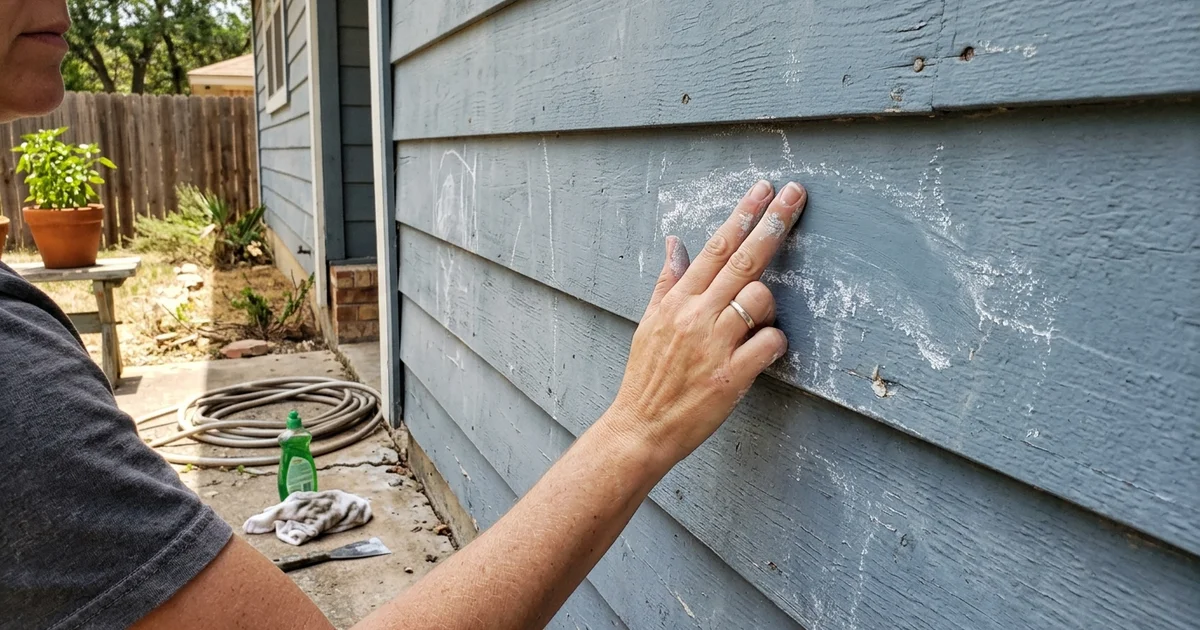
Chalking happens when UV radiation breaks down the chemical binders in your paint. You will notice a fine, white or tinted powder on your hands after rubbing a sunny wall. Light chalking is normal on older applications, but heavy chalking means the protective film is failing.
Our experts frequently see cheap, builder-grade chalking paint fail heavily in just 5 to 7 years across the US. High-quality 100% acrylic paints, such as Sherwin-Williams Emerald, resist this UV degradation and hold their binder for 15 years or more. Ignoring heavy chalking makes the next job harder because painters must power wash the residue completely and apply a specialty bonding primer.
Use this quick test to check your walls:
- Wipe a dark cloth firmly across a south-facing or west-facing wall.
- Check the cloth for a heavy layer of dusty residue.
- Look at the foundation block below the siding for colored streaks washed down by recent rain.
Sign 2: Fading
Fading occurs when paint pigments lose their chemical stability due to constant sun exposure. Compare a highly exposed sunny wall with a shaded area behind a downspout to spot the severe difference. This color loss indicates a thinning, weaker film that offers less weather resistance.
We always remind clients that fading alone is rarely an emergency. A faded house just looks tired, but the siding might still be protected from rain. However, severe fading usually travels alongside heavy chalking and signals that the coating is nearing the end of its functional life.
To make a smart decision on fading, consider these factors:
- The color choice: Dark blues and deep reds fade much faster than light tans or whites.
- The direction: South and west walls take the harshest afternoon sun and fade first.
- The sheen: Flat paints tend to show fading faster than satin finishes.
Sign 3: Peeling, Flaking or Blistering
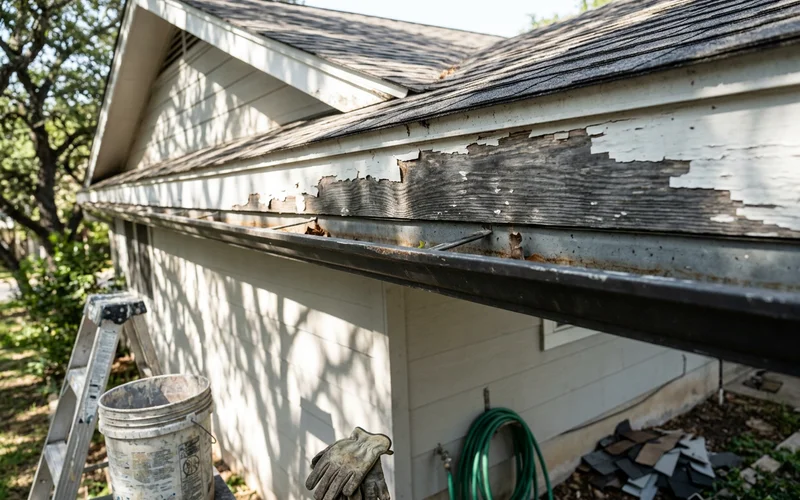
Peeling or blistering paint indicates a total loss of adhesion, leaving your siding completely exposed to the elements. This is the one warning sign you should never ignore. Blisters typically form when trapped moisture or intense heat pushes the coating away from the underlying surface.
Our crews look closely at several high-risk zones during a property inspection. Moisture naturally collects in these areas and accelerates the peeling process. Once the bond fails, rain easily penetrates the bare wood, leading to expensive rot repair.
Look closely at these specific areas on your home:
- Fascia and soffits along the roof edge where gutters might leak.
- Window sills and the flat bottoms of trim boards where water sits.
- Garage door trim and exterior door frames near the ground.
- Areas near sprinklers, gutters, and downspouts that stay wet constantly.
Recent 2026 US housing data shows that repairing hidden wood rot before painting typically adds $500 to $1,500 to a project. Catching peeling exterior paint early prevents that moisture intrusion and keeps your budget manageable.
Sign 4: Cracked or Missing Caulk
Cracked caulk breaks the vital weather seal at the joints around your home. This failure lets rain sneak behind the protective barrier, accelerating structural damage. Look closely at the seams where siding meets trim, around windows, and at corner boards.
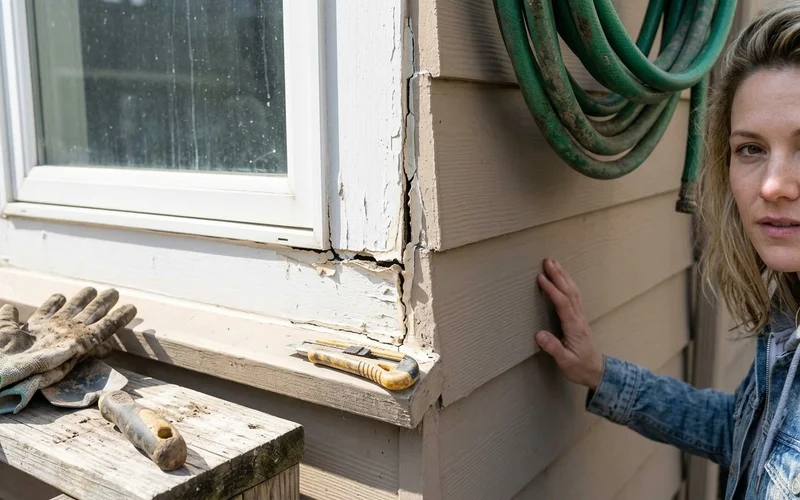
We highly recommend inspecting your exterior caulk lines every single year. Caulk shrinks and pulls away from the wood as it ages in the sun. This tiny gap allows water to pool behind the siding, which is a leading cause of severe peeling and internal wood rot.
Replacing failed caulk is a very cheap maintenance task that saves thousands of dollars in future repairs. If you notice split lines or missing chunks, schedule a repair quickly to restore the water barrier.
Sign 5: Exposed or Soft Wood
Soft, gray wood means the original coating is entirely gone and rot has officially set in. The structural integrity of the trim or siding is now compromised. You can test suspicious spots by pressing gently into the timber with a flathead screwdriver.
Our repair specialists know that if the tool sinks into the board with minimal hand pressure, you have active decay. You must replace or professionally repair these soft sections before applying any new primer or color. Painting over wet, rotten wood guarantees the new coat will bubble and peel within a few months.
According to 2026 US contractor estimates, replacing severely rotted exterior framing or structural elements can cost upward of $5,000. Catching soft wood early and replacing a single board keeps the repair bill incredibly low.
Sign 6: Stucco Cracks
Hairline cracks in stucco are common as houses settle into the soil over the years. You can usually fill and bridge these small surface fissures with a specialized coating. Wider cracks that keep growing suggest a more serious issue with foundation movement or internal moisture.
Our guide to elastomeric coatings for stucco explains the best options for sealing these gaps. A high-quality elastomeric paint stretches up to 300 percent to bridge hairline cracks and keep water out. This flexibility is crucial for homes in regions with heavy clay soils or frequent temperature swings.
US averages for 2026 show traditional stucco installation or major resurfacing costs roughly $6 to $12 per square foot. Protecting your existing finish with the right flexible coating is a fraction of that replacement cost. Get any crack wider than a credit card inspected by a professional before applying paint.
Now or Later? A Quick Guide
Deciding when to repaint house exterior surfaces comes down to evaluating the immediate risk of water damage. This simple reference table helps prioritize your next steps. Use it to determine if you need to act immediately or if the project can wait a year.
| What you see | How urgent | Why it matters |
|---|---|---|
| Light chalking, some fading | Plan within a year or two | Mostly cosmetic, but the film is thinning |
| Heavy chalking everywhere | Plan soon | The binder is gone, protection is weak |
| Cracked or missing caulk | Fix immediately | Rainwater easily gets behind the barrier |
| Peeling or blistering | Don’t wait | The bare surface is completely exposed |
| Soft or rotten wood | Don’t wait | Damage spreads quickly and increases costs |
| Wide or growing stucco cracks | Get it checked | Points to active moisture or structural movement |
We suggest taking a photo of the problem areas on your phone with a date stamp. Compare the images a few months later to see if the deterioration is accelerating quickly.
The Cost of Waiting
Paint is vastly cheaper than structural carpentry repairs. Delaying your exterior project almost always increases the final bill. When you repaint while the surface remains sound, the job consists primarily of basic prep work and fresh coats.
Our estimators consistently see project costs skyrocket when homeowners wait too long. Once the wood begins to rot or the stucco cracks open, the job scope expands to include heavy carpentry, patching, and moisture remediation. A typical US home exterior paint job averages about $3,177 to $5,800 in 2026, but adding extensive wood rot repairs can easily double that figure.
In harsh sun and rain, a delay of just one or two years makes a massive financial difference. Staying ahead of the maintenance curve protects your property value and keeps your money in the bank.
How Often Should You Expect This?
Repaint intervals depend entirely on your specific siding material, the product quality, and local weather exposure. Wood trim generally demands attention much faster than brick or fiber cement. The direction the wall faces also matters greatly, with west-facing walls degrading faster from harsh afternoon sun.
Our detailed guide on how often to repaint covers the typical ranges for homes in the area. Generally, you should plan to inspect wood siding every 5 to 7 years. Stucco and high-end fiber cement painted with premium acrylics can often last 10 to 15 years before requiring a full recoat.
To maximize the lifespan of your next paint job, request a top-tier product like Benjamin Moore Aura or Sherwin-Williams Emerald. The initial material cost is higher, but the extended longevity saves you from paying labor rates twice in a single decade.
Check These Spots on Your Walk-Around
Certain architectural features fail long before the broad sides of your house show wear. Slow down and inspect these vulnerable locations carefully during your walk-around. If these specific trouble spots still look solid, the rest of the building is usually in excellent condition.
We advise grabbing a flashlight and checking these exact areas:
- The bottom of garage door trim, where splashing rain pools against the wood.
- Window sills, which take the most direct beating from sun and standing water.
- Gable ends and west-facing walls, which absorb the hardest afternoon heat.
- Behind large shrubs and near sprinklers, where trapped humidity prevents walls from drying.
- Porch posts and wooden railings, which endure constant physical contact and weathering.
- Areas directly under gutters, especially if those gutters overflow during heavy storms.
If you spot peeling or soft wood in these zones, the rest of the house will likely follow suit shortly. Catching the damage here gives you a head start on planning the repair.
Signs That Point to a Bigger Problem
A few specific signs suggest your home is dealing with something far worse than just aging paint. Recurring failures often indicate an active moisture intrusion or a structural defect. Fixing the root cause is the absolute only way a new coat of paint will survive.
Our inspection team looks for these red flags during every initial consultation:
- Peeling in the exact same spot, even after a recent repaint, strongly suggests water is leaking from behind the siding.
- Bubbling paint near bathrooms or kitchens usually means high interior humidity is pushing outward through the walls.
- Stucco cracks that expand quickly point to active foundation shifting rather than normal settling.
- Dark brown staining running down from windows typically reveals a failed flashing system that requires immediate replacement.
We point these structural issues out clearly during an estimate. Applying fresh color over a broken flashing system or a leaky pipe is a complete waste of your budget.
Get a Straight Answer
Determining the exact condition of your siding can be confusing, but you do not have to guess.
If you are unsure whether you are looking at minor chalking or severe failure, that is exactly what a professional estimate is for. We will walk the property with you, point out what requires immediate attention, and explain what can wait safely.
A thorough inspection gives you the facts you need to protect your investment. Book a free exterior estimate today, and our experts will evaluate your property within 48 hours.