
We often see property owners struggling to decode painting bids. Comparing a sprayed vs brushed cabinet finish is highly confusing for most people. The application method dictates the durability, the timeline, and the total cost of your project.
Our team knows that the chosen technique changes everything about the final result. Recent 2026 housing data shows full kitchen replacements costing $20,000 to $40,000. This reality makes a flawless paint job an incredibly smart financial move.
We highly recommend sprayed cabinet refinishing for most homes across the US.
This specific approach delivers the smooth, modern aesthetic that today’s buyers expect. Let’s look at the data, what it actually tells us, and explore exactly why application methods matter.
How Spraying Works
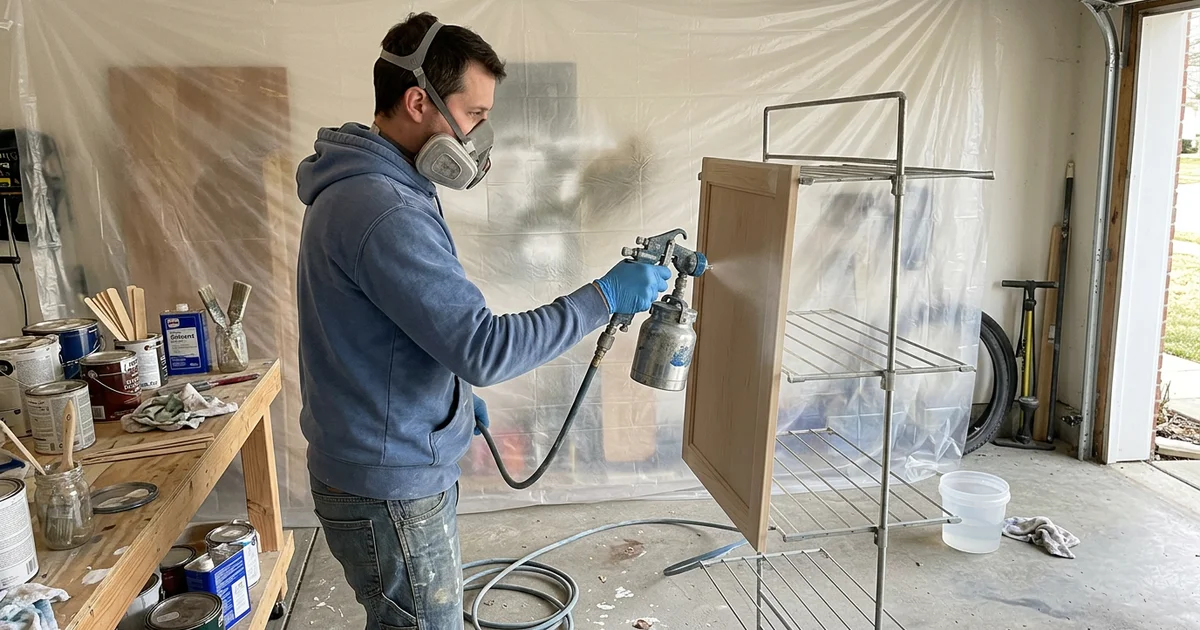
We utilize specialized tools for high-end hvlp cabinet painting. Top-tier systems like the Fuji Semi-Pro 2 push air at a gentle 3 to 10 psi. This low pressure turns premium enamels into a fine, highly controlled mist.
Our spray application lays down thin coats without any roller stipple. The finish looks incredibly smooth under harsh kitchen lighting. Standard procedure involves a few specific steps:
- Doors and drawer fronts come off, get labeled and are sprayed in a separate area on racks.
- Boxes and face frames stay in place. The kitchen is masked, then they’re sprayed or carefully finished by hand.
How Brush-and-Roll Works
We occasionally encounter kitchens where a manual brush-and-roll approach makes sense. The painter uses a fine synthetic brush on intricate molding details. A small microfiber roller handles the larger flat panels on the cabinet boxes.
Our standard process involves laying the doors flat to prevent drips during drying. High-quality paints like Benjamin Moore Advance self-level beautifully to hide some texture. Minor brush marks will still remain visible upon close inspection.
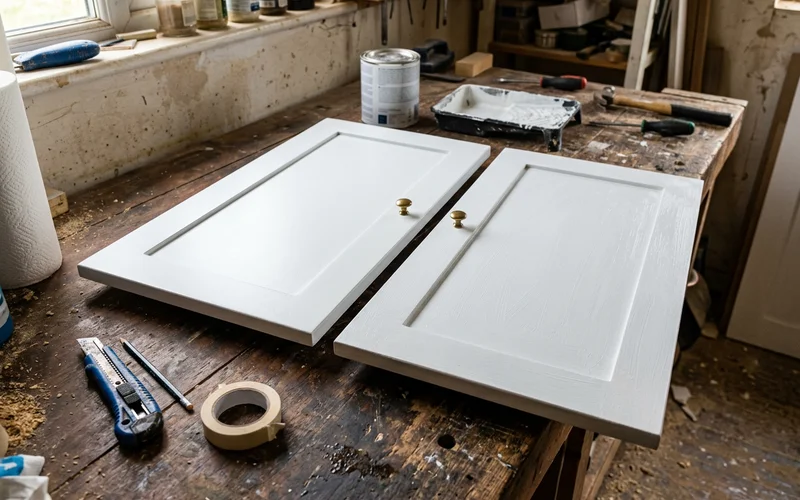
Side-by-Side Comparison: Sprayed vs Brushed Cabinet Finish
We built this comparison chart to clarify the performance differences. Professional labor rates average $45 to $55 per hour across the US in 2026. These costs fluctuate based on the chosen application style.
| Feature | Sprayed (HVLP) | Brushed and rolled |
|---|---|---|
| Finish | Smooth, factory-like | Some brush or roller texture |
| Coat thickness | Thin, even | Can vary |
| Detailed doors | Even coverage in grooves | Harder to keep even |
| Masking needed | Extensive | Moderate |
| Setup time | More | Less |
| 2026 US Average Cost | $2,000 to $6,500 | $900 to $1,500 |
| Cure time | Fast, predictable | Thicker spots cure slower |
Off-Site vs In-Place Finishing
We process most doors off-site to ensure a flawless final product. Curing paint in a temperature-controlled shop prevents dust from ruining the wet finish. A dedicated spray area allows the enamel to harden properly.
Our procedure changes depending on the physical location of the wood. Here is how that location impacts your final result:
- Doors off-site (or in a separate spray area): The technicians lay the cabinet doors flat on custom drying racks. The coats go on evenly, and airborne dust is much easier to manage. Both sides of the wood get finished properly using this method.
- Doors in place: The job starts faster if the doors remain on their hinges. Reaching the back edges requires awkward brush angles, however. Gravity also makes ugly drips more likely on vertical surfaces.
We always finish the heavy cabinet boxes right in your kitchen. That localized painting is exactly where rigorous masking matters most. Heavy-duty plastic sheeting keeps the fine mist contained.
Cost and Time Differences
We see significant cost variations when comparing spray painting cabinets vs brushing. A professional spray finish runs between $30 and $60 per linear foot. Hand-brushing costs less up front but requires vastly more hours of tedious labor.
Pro Tip: Our data shows full kitchen replacements costing $20,000 to $40,000 in 2026. This stark contrast makes professional spray painting a highly lucrative investment with a 96% ROI.
We prioritize the spray method despite the intensive initial setup. The kitchen requires extensive masking, and appliances need heavy protective coverings. Once that preparation finishes, the actual paint goes on incredibly fast.
Our estimators know that brushing skips the heavy taping phase entirely. The painter must spend excessive time dragging a brush through intricate door grooves. That manual friction often requires aggressive sanding between coats to flatten the surface.
Masking and Overspray Control
We understand the common anxiety regarding airborne paint mist. Overspray is a completely valid concern for any property owner. Modern equipment significantly reduces the chance of paint landing where it shouldn’t.
Our protocol relies on a strict containment strategy to protect your home:
- Seal the kitchen with thick plastic sheeting at doorways and over appliances.
- Cover counters, backsplashes, and floors using heavy rosin paper and tape.
- Mask adjacent walls around the perimeter of the cabinet boxes.
- Spray doors off-site, keeping the heaviest paint volume out of your house.
- Deploy premium HVLP equipment, which dramatically minimizes excess floating mist.
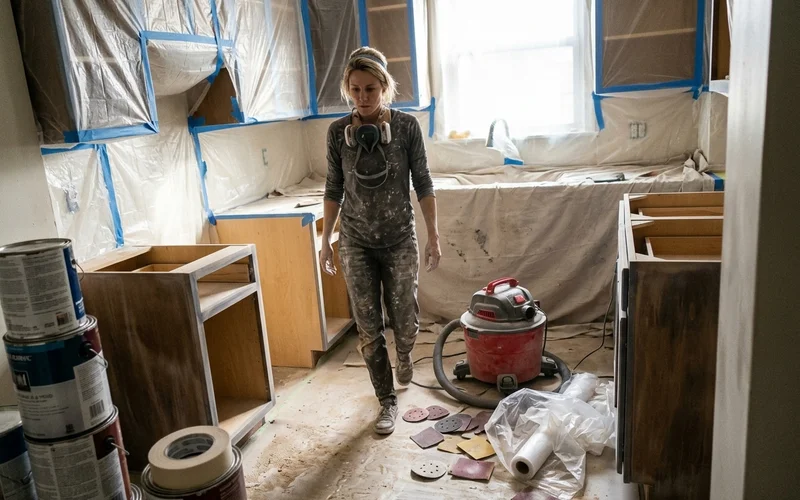
We carefully remove all protective barriers once the enamel cures. The only newly painted surfaces will be your stunning cabinets. The rest of your kitchen remains spotless.
When Brushing Can Make Sense
We recognize specific scenarios where hand-painting is the logical choice. A tiny bathroom vanity might not justify a massive taping operation. Quick touch-ups on existing scuffs also favor a simple brush application.
Our crews might brush built-in bookshelves if sealing the room proves impossible:
- A small vanity or a few built-ins
- Touch-ups and minor hardware repairs
- Situations where masking a full spray setup isn’t practical
We strongly advise spraying the doors and drawers for full kitchen renovations. The resulting factory-grade aesthetic simply cannot be matched by manual tools. You get a much harder, smoother surface for your daily cooking environment.
Primer Matters Either Way
We treat the priming phase as the foundation of the entire project. The primer dictates exactly how aggressively the topcoat bonds to the wood. A high-quality bonding agent like INSL-X Stix ensures the enamel never peels.
Our painters switch to Zinsser B-I-N shellac primer for knotty pine or heavy tannin bleed. That specialized shellac permanently blocks ugly yellow discoloration from bleeding through the white paint. A sprayed primer layer dries perfectly flat, guaranteeing the subsequent color coats look flawless.
How Many Coats?
We typically apply a proven three-coat system for maximum durability. The standard process involves one primer coat followed by two full coats of enamel. Light scuff-sanding happens between every single layer to promote mechanical adhesion.
Our team favors premium products like Sherwin-Williams Emerald Urethane Trim Enamel. Spraying this specific urethane-modified alkyd allows us to apply incredibly thin sheets of color. Those micro-thin layers cure much harder and faster than thick brushed globs.
What About Cabinet Interiors?
We approach cabinet interiors differently than the exterior faces. The inside boxes are highly difficult to mask for a high-pressure spray application. Professional painters charge $45 to $55 an hour, making interior masking a very expensive addition.
Our standard practice involves brushing or rolling the interiors if requested. Most property owners skip the hidden interiors to save substantial money on the budget. Painting the inside of glass-front accent uppers is the most common compromise.
What You’ll Notice Day to Day
We want you to think about how your kitchen lighting interacts with paint. Raking morning sunlight highlights every tiny flaw or texture on a wooden panel. Deep trending colors like Sherwin-Williams Evergreen Fog expose brush strokes far more than basic white.
Our sprayed doors offer a uniform reflection that mimics brand-new factory finish cabinets. Brushed doors carry a distinctly rustic, handmade texture that catches under-cabinet lighting. Most property owners strongly prefer the pristine spray finish after viewing physical samples side-by-side.
What to Ask When Comparing Bids
We encourage you to question your contractors closely before signing any agreements. The cheapest quote often hides a low-quality brush application using subpar materials. Asking specific technical questions separates the legitimate professionals from the amateurs.
Our best advice is to demand the exact brand names of the primers and paints.
- Will you spray or brush the cabinet doors?
- Will the doors be finished in place or taken off-site?
- Are you using a premium enamel like Benjamin Moore Advance or Sherwin-Williams Emerald Urethane?
- How exactly will you protect my kitchen from airborne overspray?
We wrote a detailed breakdown of the entire property transformation process. To see how the whole project runs day by day, read what to expect when your cabinets are painted.
This timeline helps you plan your routine during the renovation work and fully understand the benefits of a sprayed vs brushed cabinet finish.