
Every week, we see homeowners paralyzed by the cost of a full kitchen tear-out. The structural boxes are usually in great shape, but the dated exterior surfaces ruin the room’s aesthetic.
You actually have three main routes to solve this, ranging from a $3,000 paint job to a $30,000 total replacement.
Our goal here is to provide a straight cabinet painting vs refacing vs replacement comparison. This clear data will help you choose the right path before you commit to cabinet refinishing or a full remodel.
Option 1: Painting
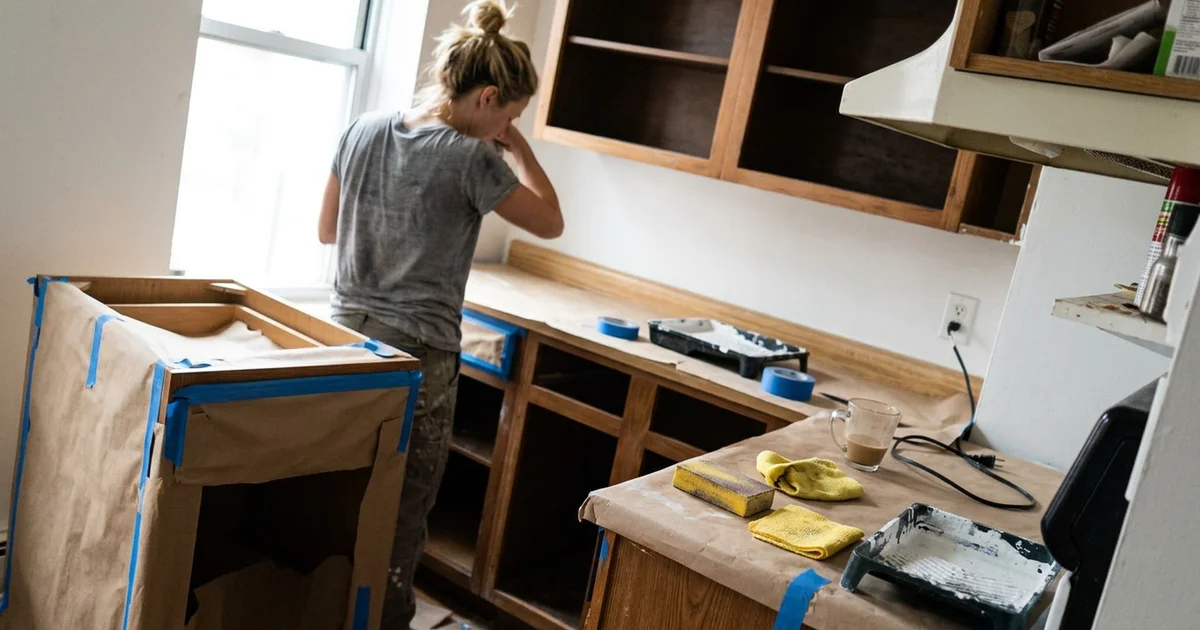
Painting updates your existing doors, drawer fronts, and boxes by applying a fresh, durable enamel finish. This is the fastest and most budget-friendly method. We typically see 2026 US average costs for professional painting landing between $2,500 and $6,500.
What it is: Your existing doors, drawer fronts, and boxes are cleaned, sanded, primed, and finished in a durable enamel. New hardware is an easy, optional upgrade during this process. Our team highly recommends using high-grade acrylic-alkyd hybrids, like Sherwin-Williams Emerald Urethane, to achieve factory-like hardness. This specialized paint prevents the chipping that often ruins amateur jobs.
Best when:
- Boxes and doors are structurally solid
- You like the current layout and footprint
- The door style is fine, but the oak grain or finish color is dated
- You want the biggest visual change for an average cost of $2,500 to $6,500
Limits:
- Door styles stay exactly the same
- Damaged boxes or bad kitchen layouts remain unfixed
- Deep oak grain will still show texture unless specifically filled
Option 2: Refacing
When comparing cabinet refacing vs painting, refacing keeps your existing cabinet structure intact while completely changing the exterior style. It offers a solid middle ground for kitchen updates. We see this option frequently chosen by homeowners who want a modern Shaker door without the mess of a tear-out.
What it is: Your existing boxes stay in place, while the face frames get a new matching veneer. You then get brand new doors and drawer fronts in a completely new style. Our research using 2026 Modernize data puts the average US cost to reface between $4,000 and $9,500. This price depends heavily on whether you choose rigid thermofoil laminate or a premium wood veneer.
Best when:
- Boxes are solid and the layout still works perfectly
- You want a totally different door style
- Your current doors are damaged or the old thermofoil is peeling
Limits:
- Costs significantly more than a standard paint job
- You are still locked into your existing layout and box sizes
- Cheap laminate veneers can peel off near high-heat appliances
Option 3: Replacement
When deciding to paint or replace kitchen cabinets, a full replacement removes the old kitchen entirely to install brand new units. This path gives you total design freedom. We always warn clients that a full tear-out is a major construction zone.
What it is: Old cabinets come out entirely, and brand new ones go in. This is often paired with new countertops, backsplashes, and major plumbing or electrical changes. Our typical 2026 national data shows the average cost for a full replacement runs between $20,000 and $40,000. Custom features and solid plywood boxes easily push that number higher.
Best when:
- Boxes are damaged from water leaks or years of heavy use
- You want a completely new layout, a larger island, or different appliance locations
- You are already doing a full kitchen remodel anyway
Limits:
- Carries the highest cost by a very wide margin
- You will face the longest downtime and household disruption
- A tear-out usually forces you to buy new countertops and flooring

Side-by-Side Comparison
Evaluating your choices requires looking closely at cost, downtime, and visual impact. The data below helps you compare the three options quickly.
| Feature | Painting | Refacing | Replacement |
|---|---|---|---|
| 2026 Average US Cost | $2,500 to $6,500 | $4,000 to $9,500 | $20,000 to $40,000+ |
| Kitchen downtime | Several days | About a week | Several weeks or more |
| New door style | No | Yes | Yes |
| Fixes damaged boxes | No | No | Yes |
| Layout changes | No | No | Yes |
| Countertops affected | No | Usually not | Often replaced |
| Mess and disruption | Low to moderate | Moderate | High |
How to Tell If Your Boxes Are Sound
A quick physical inspection determines if your cabinet boxes can handle painting or refacing. If the structural integrity is compromised, a total replacement is your only safe option. Our team looks closely at the materials, especially older particleboard that swells easily from moisture.
A simple flashlight inspection helps reveal the truth.
Critical Areas to Check
- Sink base. Look for swelling, soft spots, or dark stains from old plumbing leaks.
- Shelves. Sagging shelves can be replaced, but bowing structural boxes are a major red flag.
- Joints. Face frames should be tight to the boxes without separation.
- Doors. Heavy medium-density fiberboard doors will pull away if the hinge screws are stripped out of the frame.
If the boxes pass these checks, painting or refacing is safely on the table. Failing these tests means replacement becomes the better long-term financial answer.
Timeline and Downtime
The timeline varies from less than a week for paint to potentially months for a full remodel. Understanding this schedule helps you plan your meals and daily routine. We try to set realistic expectations for construction fatigue right from the start.
Breaking Down the Schedules
Painting: Doors and drawers come off and get labeled on day one. Boxes are prepped, sanded, and finished right in place using high-grade equipment. Most professional painters take doors back to a shop for spraying, returning to reinstall them over several days. You can usually use the sink and fridge throughout this entire process.
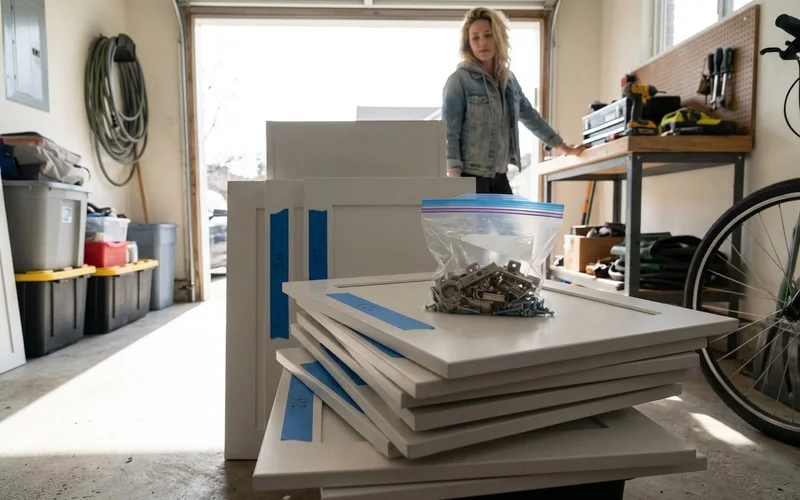
Refacing: Expect a similar disruption to painting, plus the added lead time to measure and order custom doors. The on-site work takes about a week to apply veneers and hang the new fronts.
Replacement: This involves full demolition, possible plumbing shifts, and custom electrical work. You will spend weeks waiting for cabinet installation and countertop templating.
A Simple Decision Path
Choosing your path comes down to layout, damage, and door style. Follow this quick checklist to find your answer. Our clients find that answering these four questions eliminates the guesswork immediately.
The Four-Step Filter
- Do you need a different layout? If yes, budget for a replacement.
- Are the structural boxes damaged? If yes, opt for replacement.
- Do you want a totally new door style? If yes, look into refacing.
- Happy with the layout and door style, just hate the dated color? Go with painting.
Mixing Options
You do not have to commit to just one single strategy when exploring kitchen cabinet update options. Combining these approaches saves money while delivering a custom look. We frequently execute hybrid projects that maximize visual impact and protect the budget.
A common tactic is keeping the perimeter intact while upgrading the center island.
Popular Hybrid Kitchen Strategies
- Paint the cabinets and replace the countertops, for a big change without buying new boxes.
- Paint the perimeter and build a new island. Many designers use a bold contrasting color for the new island to create a focal point.
- Paint most cabinets and replace a damaged sink base. You can swap out one ruined box and paint everything to match perfectly.
- Paint now, plan a remodel later. This buys you five to ten years to save up for the dream kitchen.
These hybrid approaches deliver massive visual impact for a fraction of the cost.
Resale Value
If you plan to sell soon, a minor kitchen update provides a much higher return on investment than a total tear-out. Buyers easily spot dated cabinets in listing photos. Our advice aligns with the 2026 Remodeling Magazine Cost vs. Value report.
That national data shows a minor kitchen refresh recoups roughly 70 to 80 percent of its cost at resale.
Conversely, a major $40,000 kitchen remodel typically recoups only 30 to 50 percent. Full replacement rarely pays for itself at the closing table unless the kitchen is literally falling apart.
Our detailed guide on painting before you sell has more on maximizing your property value.
Questions to Ask Yourself
Your daily habits, budget, and future plans dictate the right renovation choice. Assessing these practical factors keeps your project grounded. We recommend sitting down with your family to answer these honestly.
Core Planning Questions
- How long do I actually plan to stay in this specific home?
- Is the current layout working for how I cook and entertain?
- Are the core boxes solid, particularly under the sink and dishwasher?
- How long can my household manage without a fully functioning kitchen?
- What is my realistic budget, keeping in mind that countertops average $3,000 to $5,000 alone?
Your honest answers will usually point clearly to the most logical option.
What Each Option Looks Like Day to Day
The daily reality of a kitchen project ranges from mild inconvenience to a total lack of cooking space. Knowing the daily flow helps you prepare your household. We set up heavy-duty masking and HEPA filtration to protect your home during prep.
Even with precautions, the daily disruption is a real factor to consider.
Daily Project Realities
Painting week: Doors come off on the first day. Counters and floors are heavily masked, and the frames are sanded and primed in place. You can usually still use your sink and fridge during the evenings. The freshly sprayed doors come back a few days later with fresh hardware.
Refacing week: The process is similar to painting, but the vendor measures and orders new doors weeks ahead of time. The installation week involves cutting veneers on-site and hanging the new fronts.
Replacement month: Demolition leaves you with exposed drywall and capped pipes. You must coordinate cabinet installation, wait for countertop templating, and then wait again for the final stone installation. Many families are forced to set up a temporary microwave kitchen elsewhere in the house.
If minimizing disruption matters to you, that difference alone often decides the project direction.
Why Painting Is So Popular in Austin
Austin area homes built between the 1980s and 2000s usually feature solid, well-built cabinets that just look visually tired. Replacing these sturdy boxes with modern builder-grade materials is often a downgrade in quality. We see incredible results reviving these older kitchens in Cedar Park, Round Rock, and surrounding neighborhoods.
The layout usually functions perfectly, making a cosmetic update the smartest move. For these specific Texas homes, applying a high-end finish provides a dramatic change in days, not weeks.
If you are still weighing cabinet painting vs refacing vs replacement, evaluate your structural boxes first. Want to see what this process would cost for your exact layout?
Our guide to cabinet painting cost explains how regional pricing works. You can review that resource to get a clear baseline. During any estimate, we will always tell you honestly if painting simply isn’t the right fit for your home.