
Why Cabinet Pricing Is Different
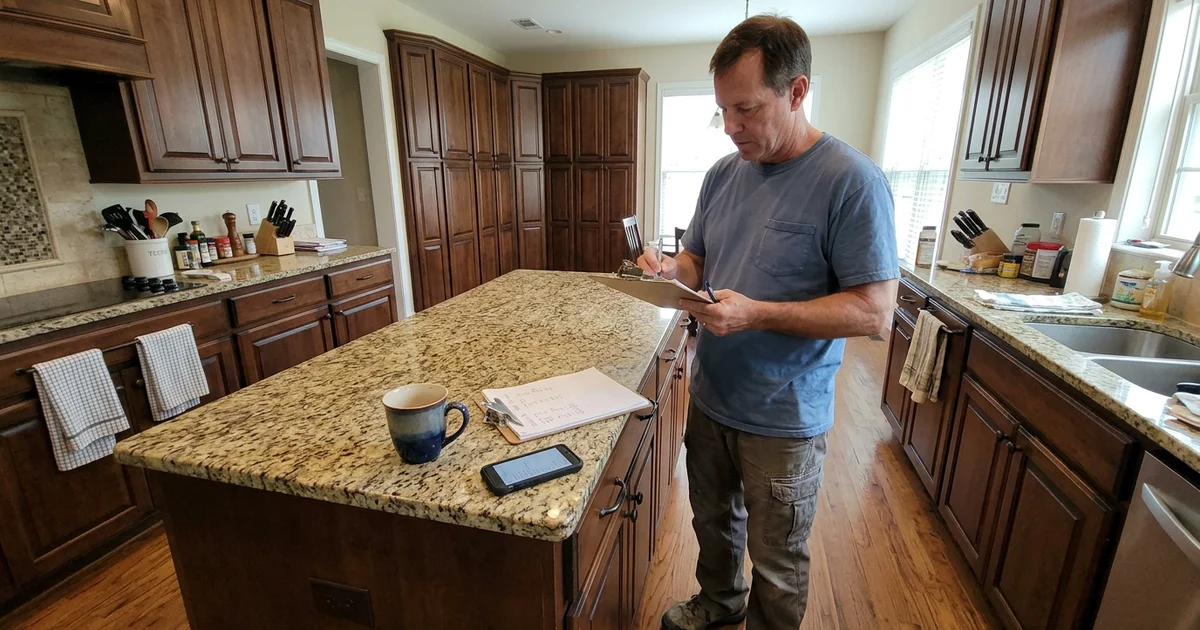
We hear from property owners every day who are surprised by how different cabinet finishing quotes look compared to standard wall painting. Understanding the average cabinet painting cost texas residents pay starts with knowing that projects are priced by the individual piece, not by standard square footage.
Our estimators count each door and drawer front because both sides require extensive prep, primer, and topcoat. This detail-oriented approach guarantees a factory-grade result.
We want to help you read these bids clearly.
For how we handle Austin cabinet painting prices, including our fixed quotes, see our service page.
Common Pricing Models
The three most common pricing models for cabinet painting are per piece, per linear foot, and per project. Our detailed quotes always use the per-door method because it provides the most transparency. In Texas right now, the average cabinet painting price per door typically ranges from $100 to $175. We list exactly what is included for the cabinet boxes and face frames. This approach makes it easy for you to check the math.
- Per door and drawer front: Each piece has a set price, and boxes and face frames are included or added. Clear and easy to check.
- Per linear foot: Based on the length of cabinet runs, upper and lower. Simple, but it can hide differences in door count and detail.
- Per project: One total based on a site visit. Good if it lists what is included.
What Drives Cabinet Painting Cost
The total cost to paint kitchen cabinets is driven primarily by the piece count, current condition, and your chosen finish. Our team evaluates several regional factors when calculating your final number. Texas humidity and intense afternoon sun can affect the required materials and curing time.
Door and Drawer Count
The single biggest factor in your quote is the total number of doors and drawer fronts. We find that a standard Houston or Austin kitchen usually has between 20 and 30 pieces. A project of that size typically costs between $3,000 and $6,500 in 2026.
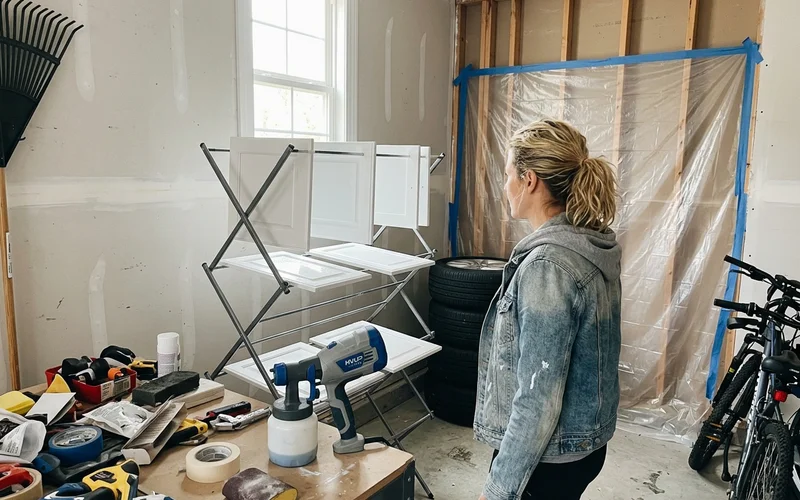
Our team removes, labels, cleans, sands, primes, and sprays both sides of every single piece. Large Texas kitchens featuring pantry walls and butler pantries will push the price higher due to the increased volume.
Islands and Extra Runs
Kitchen islands and extra cabinetry runs add significantly to the surface area and workload of the job. Our crews often see islands that feature decorative corbels, beadboard panels, and custom trim.
These architectural details require careful brushwork and extra masking. We also paint built-in desks, wet bars, and mudroom drop zones. Adding these extra runs will increase the final project total.
Grain Filling
Grain filling is an optional step that eliminates the textured look of oak, giving you a completely smooth, modern finish. We use specialized products like Cabinet Mud to fill the deep pores found in open-grain woods.
This process adds a full extra day of labor to sand everything perfectly flat. Our estimates list grain filling as a separate line item because it significantly increases the workload. Skipping this step means the wood grain pattern will remain visible under the new enamel.
Common woods that require grain filling include:
- Red Oak
- White Oak
- Hickory
- Ash
Color Changes and Two-Tone Designs
Transitioning from dark stained wood to bright white requires more primer and time than a simple color refresh. Our painters apply high-adhesion bonding primers, like INSL-X Stix, to block dark stains from bleeding through.
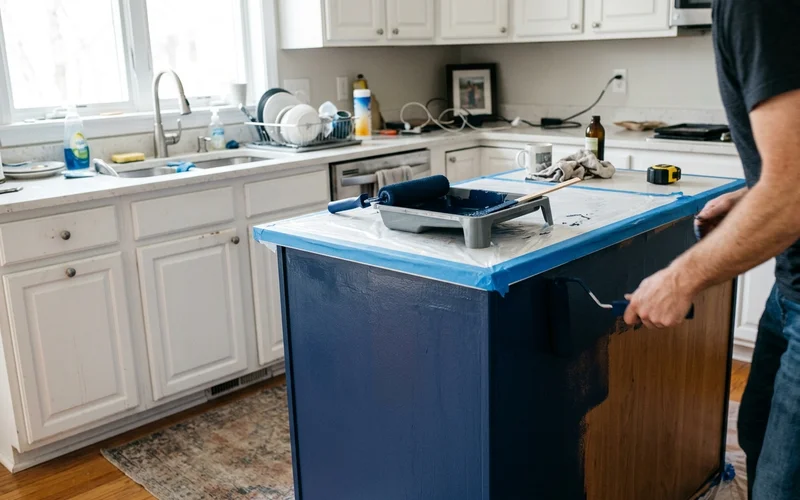
Two-tone kitchens, such as pairing a dark navy island with light perimeter cabinets, are extremely popular in 2026. We must perform extra masking and equipment cleaning to switch between the two colors. This dual-color process adds moderate labor costs to the final bill.
Interiors
Painting the inside of your cabinet boxes adds a massive amount of surface area and drying time. We leave standard, closed-door interiors unpainted because it is the industry standard. Most homeowners choose to skip the interiors entirely to save money.
“Painting the interior of your cabinets can increase the total labor cost by up to 40 percent, which is why most clients only request it for glass-front display doors.”
Door Style
Intricate door styles take much longer to prep and paint than flat surfaces. Our technicians can process flat slab doors the fastest because they have no recessed areas.
Traditional Shaker doors have inside corners that require careful detail sanding. We spend the most time on raised panel doors with heavy profiles. Those deep grooves collect dust and grease over the years, demanding intense cleaning before primer can stick.
Condition
Cabinets with heavy wear, peeling finishes, or water damage require extensive repair before painting can begin. Our preparation process includes applying commercial-grade degreasers to every square inch. Cooking grease is the number one reason cabinet enamel fails to bond.
We see a lot of water damage near sink bases and heavy grease buildup around standard Texas stoves. If your wood has deep dings or failing joints, those repairs will increase the overall price.
Common issues that require extra prep time:
- Water damage near sink bases.
- Heavy cooking grease buildup around the stove.
- Peeling finishes from previous DIY paint jobs.
- Deep gouges or broken hinges.
Spray vs Brush Cost
Spraying cabinets usually costs somewhat more than brushing because of the extensive masking and equipment setup required. We strongly recommend spray application because it delivers a flawless, factory-grade finish. Modern high-end products, like Sherwin-Williams Emerald Urethane Trim Enamel, self-level beautifully when sprayed.
Our technicians use professional Graco sprayers to apply the coating evenly across every door. The brushed method is cheaper but often leaves visible stroke marks that detract from a modern kitchen look. Our sprayed vs brushed guide explains the difference in detail.
Benefits of the spray method include:
- A completely smooth, factory-like finish.
- Faster application time for large kitchens.
- Superior self-leveling of the enamel.
- No visible brush strokes or roller stipple.
Cost Drivers at a Glance
This table summarizes the main factors that push your cabinet painting budget up or down. We created this quick reference to help you evaluate your own kitchen before requesting quotes. Reviewing these elements will give you a realistic expectation of where your project falls on the pricing scale.
| Driver | Lower cost | Higher cost |
|---|---|---|
| Piece count | Small kitchen | Large kitchen, island, pantry |
| Door style | Flat slab | Raised panel, detailed |
| Wood grain | Painted MDF, closed grain | Oak with grain filling |
| Color | Light to light | Dark to light, two-tone |
| Interiors | Exterior only | Interiors included |
| Condition | Clean, sound | Grease, water damage, peeling |
| Method | Brushed | Sprayed |
Budget Comparison With Replacement
Painting reuses your existing cabinet boxes and doors, making it a fraction of the cost of full replacement. We find that a complete kitchen remodel in Texas easily exceeds $25,000 in 2026. Refinishing a standard layout typically costs between $3,000 and $6,500, offering immense value.
Our clients appreciate avoiding the massive disruption of tearing out countertops and replumbing sinks. If your boxes are structurally sound and you like the current layout, painting is the smartest financial choice. If not, see our guide on painting vs replacement.
| Painting | Replacement | |
|---|---|---|
| Relative cost | Fraction of replacement | Highest |
| Countertops | Stay | Often replaced |
| Downtime | Several days | Several weeks |
| Layout change | No | Yes |
What Your Quote Should Include
A professional estimate must clearly detail every step, product, and cost associated with your specific kitchen. We provide written proposals that list the exact primer and topcoat brands. Generic terms like “premium paint” are a major warning sign in this industry. Our quotes always specify the exact piece count and the agreed-upon drying schedule. Make sure any bid you receive includes these essential details.
- Number of doors, drawer fronts, and boxes.
- Prep steps, including commercial degreasing, sanding, and any grain filling.
- Primer and enamel products by exact name, such as INSL-X Stix or Benjamin Moore Advance.
- Spray or brush application method.
- Colors, including detailed two-tone color schemes.
- Interiors, if included.
- Hardware work, if any.
- Schedule and cure-time guidance specific to Texas humidity.
Hardware Costs
New hardware is not part of the standard painting cost, but it is worth budgeting for separately. We recommend finalizing your knob and pull choices early in the planning process. A large kitchen can easily require 40 or more handles, adding $150 to $500 to your total materials budget.
Our carpenters charge a small labor fee, usually $5 to $10 per door, if the new hardware requires drilling new holes. Old holes must be patched and sanded before the primer goes on. Tell your estimator early so this work is in the quote.
Is Cabinet Painting Worth It?
For most kitchens with solid boxes and a working layout, professional painting is absolutely worth the investment. We consider this service one of the highest return-on-investment projects you can undertake for your home. A modern, bright kitchen is the first thing prospective buyers look for in a 2026 real estate market.
Our teams can execute this dramatic visual transformation in just a few days. It helps tremendously at resale, since dated cabinets drag down the perceived value of the entire property.
Questions to Ask When Comparing Cabinet Bids
You need to ask specific questions about preparation and products to ensure you are comparing equivalent services. We strongly encourage property owners to vet their contractors thoroughly using these exact questions. A low price usually means the painter is skipping the critical degreasing step or using cheap, soft wall paint.
Our estimators are happy to walk you through our technical process and warranty details. A lower price that skips steps will likely cost more later in touch-ups or a complete redo.
- How will you clean the cabinets? Commercial degreasing is essential in kitchens to remove oils.
- What primer will you use? You want a bonding primer like Stix, or a shellac-based product where stains or knots need blocking.
- What topcoat? Real cabinet-grade enamels, like Sherwin-Williams Emerald Urethane, cure much harder than standard wall paint.
- Spray or brush? Verify if doors are finished on-site or transported to a dedicated spray area.
- How many coats? One bonding primer and two solid finish coats is the professional standard.
- Is grain filling included if you want a completely smooth look on raw oak?
- How will you label and reinstall doors? Proper labeling ensures perfect hinge alignment.
- What is the warranty? Look for a written guarantee covering adhesion failures.
Typical Project Length
A standard professional cabinet painting job takes four to five days of active work on site. We mask off your kitchen and set up ventilation on the very first morning. Products like Benjamin Moore Advance require up to 24 hours of drying time between coats.
Our scheduling accounts for Texas humidity, which can significantly slow down the enamel curing process. You will need to treat the newly painted surfaces very gently for the first 30 days while the finish hardens completely. A realistic schedule is a mandatory part of every quote.
Get a Real Number
The only way to know your exact cabinet refinishing cost is to have a professional evaluate your kitchen in person.
We count every single door and drawer during our free, on-site estimates. This visit allows the estimator to assess grease buildup, wood condition, and layout variations.
Our team will then leave you with one fixed, written price.
Get a cabinet quote today, and someone will be there within 48 hours.