
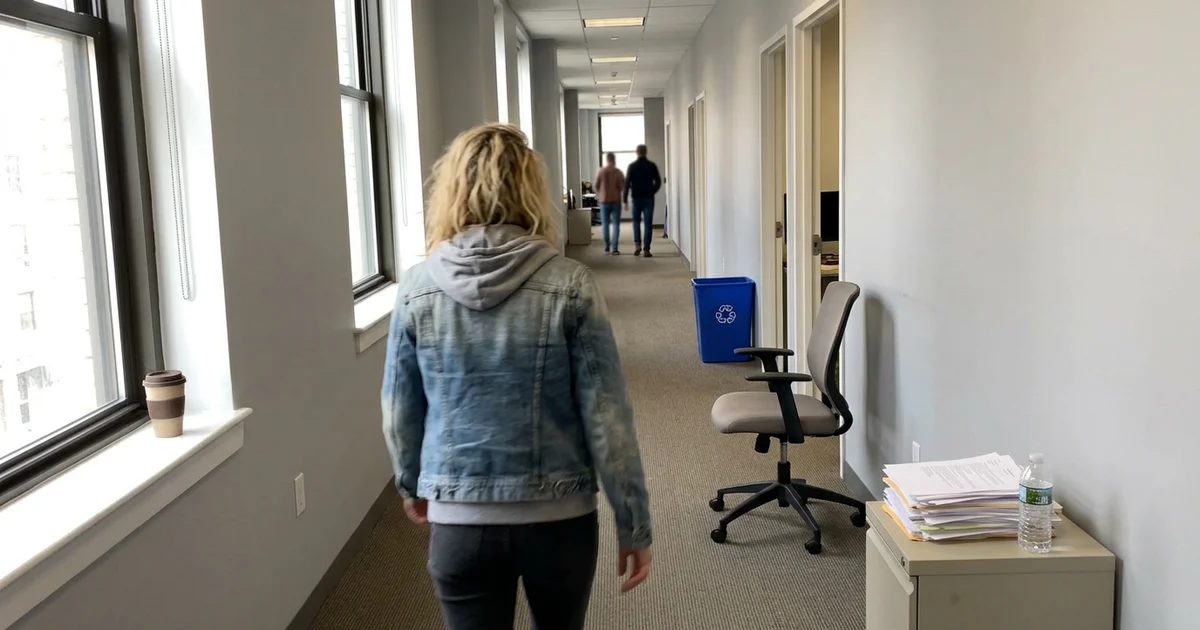
Our team sees the same frustrating pattern in commercial buildings across the US. Facility managers often find themselves repainting busy corridors every two to four years just to maintain a clean appearance.
We know that relying on standard products is a fast track to scuffed, patchy drywall. Finding the best paint for high traffic commercial walls is the most effective way to protect your investment.
Our approach focuses on stopping this cycle by specifying coatings engineered for actual daily abuse.
If you choose the right product upfront, you can significantly extend the lifespan of your surfaces. We have put together this guide to break down the exact strategies you need. Here is how you can make smarter choices for your next commercial painting project.
Standard Paint Wears Out Fast in Busy Spaces
The cheapest bucket of paint per gallon is rarely the most cost-effective choice. We encourage property owners to evaluate paint choices over a five to ten year horizon. Average commercial painting rates currently sit between $2 and $6 per square foot in the US for 2026.
Our estimators calculate that a standard 2,500 square foot lobby could easily cost $10,000 to repaint when factoring in labor. Upgrading to a scuff-resistant product adds only a fraction to the initial material cost. We know that doubling a coating’s lifespan saves thousands of dollars over a decade.
Fewer repaints mean significantly less disruption for your tenants and staff. We always compare the long-term numbers before selecting a finish.
Scuff-Resistant vs Scrubbable vs Standard
We constantly test new coatings against industry standards. The terms “scrubbable” and “scuff-resistant” get used loosely by marketing teams, but they describe very different chemical properties.
Our crews prefer to rely on verifiable performance metrics. The industry measures durability using the ASTM D2486 scrub test, which counts how many abrasive brush cycles a paint film can handle before failing.
We use this data to categorize commercial wall coatings into three distinct tiers.
- Standard wall paint: Fine for low-traffic offices and conference rooms, but marks more easily when cleaned.
- Scrubbable paint: Made to handle repeated washing without wearing through, often withstanding thousands of scrub cycles before thinning.
- Scuff-resistant paint: Formulated with specialized polyurethane technology, like Benjamin Moore Scuff-X, to resist marks before they happen.
| Feature | Standard | Scrubbable | Scuff-resistant |
|---|---|---|---|
| ASTM D2486 Rating | Low | High (2,000+ cycles) | Moderate to High |
| Resists initial marks | Low | Moderate | Very High |
| Handles heavy washing | Moderate | High | High |
| VOC Levels | Varies widely | Often higher | Modern options under 30 g/L |
| Best use case | Low-traffic rooms | Restrooms, break rooms | Corridors, lobbies, sales floors |
Picking the Right Sheen
A higher gloss level creates a tighter, less porous surface that resists moisture and physical wear. Our complete sheen guide covers the full spectrum of finishes. For high-traffic commercial spaces, you have three primary options.
- Eggshell: Good for offices and conference rooms with decent washability.
- Satin: A strong choice for corridors and retail walls, measuring around 20 to 30 units on a gloss meter.
- Semi-gloss: For doors, frames, restrooms, and back-of-house areas to resist moisture.
We see a common mistake when property managers go too shiny on large walls. Long corridors under fluorescent or LED lights will show every drywall tape seam and patch in a high sheen. Our teams find that a satin finish in a scuff-resistant line usually delivers the best results.
Where to Spend More
Strategic budget allocation is crucial for large facilities. We advise clients to focus their premium materials on the areas that take the heaviest abuse. You do not need to apply scuff-resistant coatings to every square inch of your building.
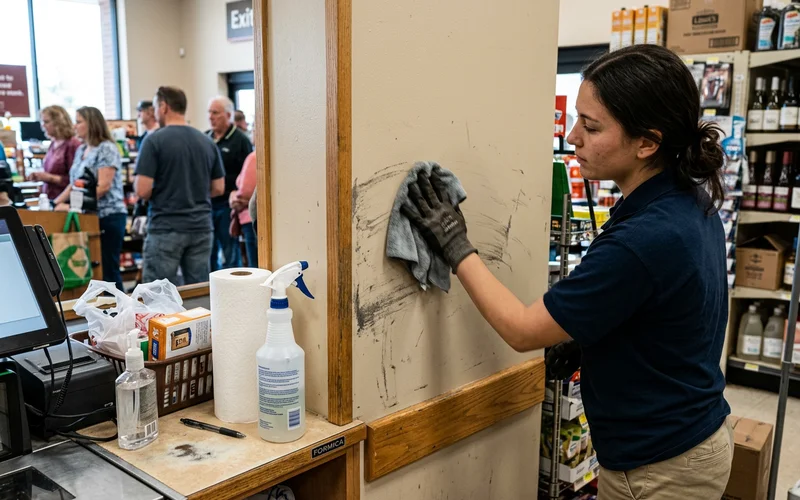
Our site walkouts usually reveal that most wall damage happens in a specific “strike zone” located two to four feet off the floor. This height perfectly aligns with rolling carts, backpack buckles, and chair backs.
We recommend physical protection and premium paint for the following high-impact zones.
- Main corridors and elevator lobbies
- Reception and waiting areas
- Retail checkout and fitting rooms
- Break rooms and kitchenettes
- Stairwells and handrail zones
- Door frames and outside corners
Private offices and conference rooms rarely see this level of daily impact. We find that you can usually protect these lower-traffic zones with a quality scrubbable paint office solution.
Touch-Up Compatibility
Spotty touch-up jobs often look much worse than the original wall scuff. We frequently get calls to fix these mismatched patches. Touch-ups only blend perfectly if you use the exact same product, color code, and sheen.
Our field data shows that UV light and ambient air cause wall paint to slightly fade within six to twelve months. A fresh dab of paint from the original can will stand out sharply against the aged wall.
We implement a few best practices to make touch-ups work cleanly.
- Keep a digital record of the exact manufacturer, color code, and sheen.
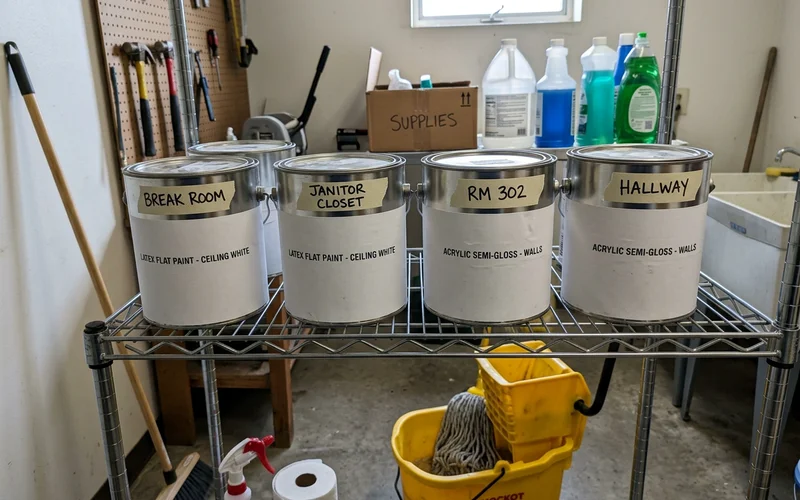
- Store labeled leftover paint in a climate-controlled spot.
- Paint corner to corner on a wall section rather than dabbing small spots.
Proper documentation saves thousands of dollars in repainting costs. We leave a dedicated touch-up kit and a detailed product list with every commercial job.
Thinking in Lifecycle Cost
The cheapest paint per gallon is rarely the cheapest over time. We calculate that a corridor in standard paint needs repainting every couple of years. A scuff-resistant line lasts noticeably longer between repaints, so the more durable product often costs less in total. For the other factors that set a project price, see how much commercial painting costs in Texas.
Our clients appreciate that fewer repaints mean significantly less disruption for their tenants or staff. We always compare the long-term maintenance frequency before making a final recommendation.
| Cost Factor | Standard Commercial Paint | Scuff-Resistant Coating |
|---|---|---|
| Material Cost | Lower upfront | Slightly higher upfront |
| Repaint Frequency | Every 2 to 4 years | Every 5 to 8 years |
| Maintenance Disruption | High frequency | Low frequency |
| 10-Year ROI | Poor | Excellent |
Corners, Doors and Frames
Painted walls are only one part of the durability equation. We know that outside corners, door frames, and wooden doors take the hardest hits from delivery carts. Paint handles a lot of wear, but a few strategic additions will make the entire space last much longer.
Our teams frequently install or paint around physical barriers to protect these vulnerable areas.
- Hard enamel on door frames and doors, usually applied in a semi-gloss finish.
- Polycarbonate corner guards from brands like Acrovyn or Koroseal.
- Kick plates made of 16-gauge stainless steel for heavy doors.
- Chair rails in conference rooms and break rooms.
Physical protection in the worst spots extends your entire maintenance cycle. We highly recommend these additions for any high-traffic facility.
Color Choices for Busy Spaces
The exact shade you pick dramatically affects how visibly worn a wall looks between cleanings. We use color strategy as a functional tool to hide daily wear and tear. The Light Reflectance Value, or LRV, dictates how much light a painted surface reflects.
Our designers look for an LRV between 40 and 60 to find the sweet spot for commercial spaces. Very light whites with an LRV of 80 or higher will highlight every shadow and smudge. We actively avoid these pale colors in busy corridors.
Extremely dark colors act like a mirror for dust particles and clear scratches. Our experience shows that mid-tone neutrals and warm grays tend to hide everyday marks best. We suggest placing bold brand colors on accent walls positioned away from the heaviest traffic zones.
“Selecting a mid-tone neutral with an LRV between 40 and 60 is the most effective way to hide daily commercial scuffing.”
Cleaning Guidelines for Your Team
We provide a detailed maintenance sheet to every client after the paint fully cures. Your janitorial staff can accidentally ruin a fresh paint job by using the wrong techniques. Our top recommendation is to ban abrasive melamine sponges, commonly known as Magic Erasers, from painted walls.
These popular sponges act like ultra-fine sandpaper and will permanently dull the sheen. We ask facility managers to share a few simple rules with their cleaning staff.
- Use a soft microfiber cloth or sponge, not abrasive pads.
- Start with plain water, then upgrade to a mild soap.
- Stick to pH-neutral cleaners, which sit right at a pH of 7.
- Avoid harsh solvents or heavy degreasers.
- Wipe gently in the direction of the wall grain.
Exterior Durability for Commercial Buildings
Storefronts, entry doors, and metal railings endure daily physical contact combined with intense weather exposure. We apply these same high-traffic durability principles to the outside of your property. Flexible 100% acrylic elastomeric paints expand and contract with US seasonal temperature swings to prevent hairline cracking.
Our crews prefer these specialized coatings for exterior stucco and masonry. Sunlight breaks down standard paint binders into a fine powder through a process called chalking. We use heat-rated and UV-rated formulas to prevent this degradation.
Hard enamels on doors and railings provide excellent resistance against shoe scuffs and hand oils. We schedule jobs during moderate weather days to ensure the paint cures properly for maximum lifespan.
“100% acrylic elastomeric coatings provide the necessary flexibility to withstand physical wear and extreme temperature shifts.”
Planning for the Next Repaint
We want your next facility maintenance cycle to be as simple as possible. Even the toughest commercial coatings will eventually need refreshing. Our advice is to log your paint details into a Computerized Maintenance Management System, like UpKeep or Fiix.
A clear digital record allows you to strategically repaint only the busiest areas instead of funding a full-building project. We highly recommend recording the exact manufacturer, product line, color code, and sheen level. Relying on a vague note like “office white” guarantees a mismatched touch-up down the road.
Keeping precise records of your coating specifications ensures a perfect color match when you need to spot-paint five years later.
Our Approach
Every commercial painting project we quote starts the same way. A standard site walk takes 30 to 60 minutes and provides a clear picture of your actual traffic patterns.
Our team analyzes multiple factors during this walkthrough.
- Cleaning routines and daily chemical use.
- Specific impact zones across your floor plan.
- Lighting conditions and sheen requirements.
You will receive specific product recommendations mapped out by area. We ensure you never pay for premium paint where standard will do. A detailed written scope lists every specific product, color code, and sheen.
Our goal is to make your future upkeep simple and cost-effective. Contact the team today to schedule your facility walkthrough and start choosing the best paint for high traffic commercial walls.