
We constantly hear property managers ask for a simple price per square foot.
That question makes perfect sense. The reality is that two identically sized buildings often yield completely different painting estimates. Our recent 2026 market data shows the average office painting cost per square foot in Texas ranging from $1.50 to $4.00 for basic interiors.
The final number actually depends on your facility’s specific condition and operating hours. We built this guide to explain the exact factors driving these costs so you can confidently compare bids. For how we approach Austin commercial painting, see our service page.
How Commercial Pricing Works
Several specific variables determine your final commercial painting cost in Texas. A reliable contractor will evaluate your facility’s unique conditions rather than just measuring the floor plan.
Per Square Foot vs Project Pricing
Per square foot pricing is common for large, simple spaces like open offices, warehouses and empty suites. This metric is easy to compare across bids. It can easily hide major differences in surface prep, inventory protection, and shift scheduling.
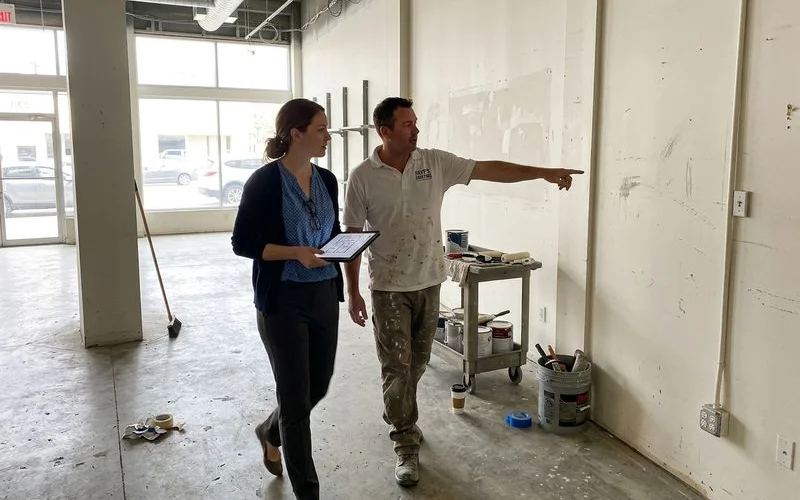
Project pricing provides one fixed number for a highly defined commercial painting estimate. This model works better for spaces with lots of variables, like occupied offices, active restaurants, and retail stores with heavy inventory. We usually provide a fixed project price after a site walk, with the scope broken down by specific areas.
Many building owners confuse their total floor square footage with the actual paintable surface area. A 50,000-square-foot warehouse floor plan might translate to 120,000 square feet of paintable wall space if the demising walls are 30 feet tall. Our estimators measure the exact vertical wall area to ensure accuracy and avoid budget surprises.
What Drives Commercial Painting Cost
Square Footage and Surfaces
Total wall and ceiling area is the starting point. Doors, frames, columns and trim all add to the final tally. Painting twenty metal door frames requires significantly more labor than rolling a flat fifty-foot wall.
Our crews must factor in the complexity of these structural details. Complex architectural features slow down production rates and increase material usage.
After-Hours Scheduling
Night and weekend work keeps your business open and fully operational. This schedule heavily affects how crews are deployed and compensated. Our experience shows that after-hours commercial work in Texas generally adds a 20% to 30% premium to labor costs.
Phased work requires crews to perform a full cleanup and reset before your doors open each morning. This daily teardown process consumes valuable hours. The guide we published on after-hours scheduling explains how phasing works in detail.
Ceiling Height and Lift Access
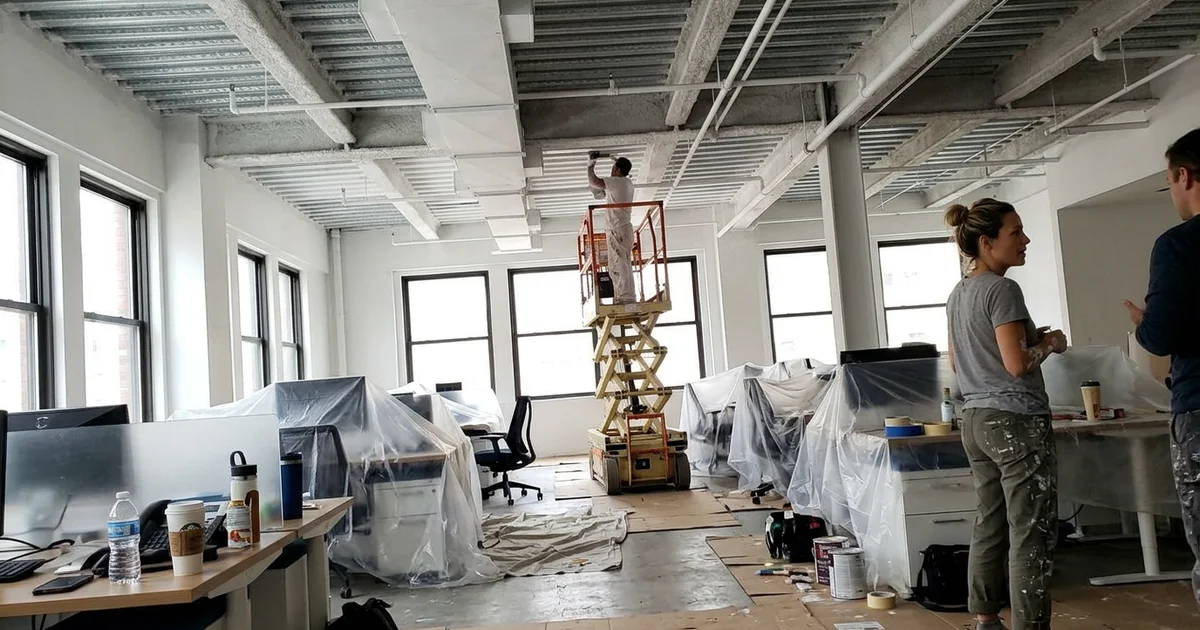
Standard office ceilings are straightforward to paint using extension poles and ladders. Open ceilings, tall warehouse spaces, and expansive atriums present distinct challenges. Equipment rentals for scissor lifts or boom lifts can easily add $500 to $1,500 per day to your total project cost.
Exposed metal structures frequently call for specialized dryfall paint. Products like Sherwin-Williams Pro Industrial Dryfall are formulated so that any overspray dries into a sweepable dust before hitting the floor.
This specialized paint is ideal for:
- Open-deck warehouse ceilings
- Exposed retail structures
- Industrial manufacturing floors
- Gymnasium and auditorium ceilings
Our team uses these coatings to drastically reduce the time spent masking floors. This strategy keeps the project moving swiftly and minimizes disruptions.
Prep and Repairs
Walls in busy commercial spaces collect constant damage. Proper repair, priming, and matching Level 4 or Level 5 drywall texture add substantial time.
Common issues we fix include:
- Dents from delivery carts
- Holes from retail slatwall removal
- Peeling patches from previous tenants
- Damaged metal corner guards
Our teams cannot apply fresh paint over failing substrates without risking peeling. Skimping on this prep work guarantees that the new finish will fail prematurely.
Protection Needs
Occupied offices, delicate retail inventory, and expensive restaurant equipment all demand careful protection. Protecting sensitive assets directly impacts your final retail painting cost. It requires taping plastic sheeting over fire sprinkler heads, HVAC ducts, and workstations.
More protection means less time actually painting during each shift. Our supervisors budget specific hours just for deploying and removing this protective masking. These steps keep your valuable property completely safe from accidental drips.
Coating Specs
Scuff-resistant, scrubbable, or specialty epoxy coatings cost significantly more upfront than standard contractor-grade flat paint. A basic commercial latex might run $30 to $50 per gallon in 2026. Premium products like Benjamin Moore Scuff-X can cost upwards of $80 to $100 per gallon.
“Premium specialty coatings are worth the initial investment because they drastically reduce the frequency of repainting high-traffic corridors.”
Some buildings or franchise tenants also have strictly required proprietary products. Our estimators always verify your specific material requirements and brand colors before finalizing any bid. Getting the right product on the walls prevents costly rework.
Cost Drivers at a Glance
| Driver | Lower cost | Higher cost |
|---|---|---|
| Space | Empty, open | Occupied, cut-up rooms |
| Schedule | Normal hours | Nights, weekends, phased |
| Ceilings | Standard height | High, open, lift access |
| Prep | Light patching | Heavy damage, signage removal |
| Protection | Minimal | Inventory, equipment, workstations |
| Coatings | Standard | Scuff-resistant, specialty, dryfall |
Budgeting Tips
- Separate must-haves from nice-to-haves. Prioritize your main lobby and high-visibility corridors first, saving private offices for later phases.
- Use durable products where it counts. Applying a premium scuff-resistant paint in high-traffic areas prevents premature damage and reduces future repainting cycles.
- Bundle work. Combining several small areas into one larger project eliminates repeated setup and mobilization fees.
- Plan around slow periods. Scheduling the project during your off-season reduces operational constraints and simplifies crew scheduling.
- Ask for a phased quote. Spreading the work across multiple fiscal quarters is a common strategy we recommend for property managers with strict annual budgets.
- Standardize your color palette. Consolidating to one or two main brand colors prevents you from paying for multiple custom-tinted gallons that sit unused in a storage closet.
What a Commercial Quote Should Include
A professional proposal must protect you from unexpected change orders. Our itemized quotes always break down the specific components of the job. You should look for these eight critical elements before signing any contract:
- Exact areas and surfaces included
- Prep and repair scope
- Products, colors and sheens by area
- Schedule and phasing plan
- Protection plan
- Insurance certificates
- Fixed price and payment terms
- Warranty
Tenant Improvements and Turnovers
Between tenants, landlords and property managers often need a fast repaint. These projects usually happen in empty spaces, which makes them simpler and faster than occupied jobs. The main cost drivers become square footage, repairs from the previous tenant, and the required turnaround time.
Our crews often repaint spaces back to a neutral “vanilla shell” standard to attract new commercial lessors. Standard flat white paints, like Sherwin-Williams ProMar 400, are highly cost-effective for these quick transitions. Tight deadlines may require us to deploy a much larger crew to hit your target lease date.
Exterior Commercial Painting
Storefronts, office buildings and retail centers all require periodic exterior maintenance. Pricing depends heavily on building height, lift access, surface type, and how much the work impacts your daily customer traffic. Current 2026 data shows exterior commercial painting in Texas averaging $1.75 to $4.25 per square foot.
Exterior projects in Central Texas are best planned for the spring and fall seasons. Weather conditions during these months provide the most predictable curing times for outdoor paints.
Common exterior surfaces we coat include:
- Stucco and tilt-up concrete
- Corrugated metal siding
- Steel structural columns
- Masonry and brick accents
Our painters often apply elastomeric coatings, like Sherwin-Williams ConFlex, to bridge hairline cracks common in Texas tilt-up concrete buildings. These specialized products prevent water intrusion and protect your property’s structural integrity.
Insurance and Compliance Costs
Legitimate commercial painters carry active general liability insurance and workers’ compensation policies. Professional teams strictly follow OSHA safety rules and provide proof of coverage upon request. These essential protections are naturally built into the contractor’s pricing model.
Our company refuses to compromise on job site safety.
“A dramatically lower bid from a competitor often means they are skipping mandatory coverage, putting your business at financial risk.”
Hiring an uninsured crew puts your entire operation in jeopardy if an accident occurs on your property.
Questions to Ask When Comparing Commercial Bids
Evaluating multiple proposals requires looking past the final dollar amount. You need to understand exactly what materials and processes each contractor intends to use. Ask these specific questions to ensure you are comparing equivalent services:
- Is the price fixed or an estimate? Fixed pricing protects your operating budget from sudden surprises.
- What’s included in prep? Specific tasks like power washing, caulking, and Level 4 drywall repairs should be explicitly named.
- Which products and sheens, by area? High-traffic lobbies require much harder coatings than a low-traffic private office.
- What’s the schedule and phasing plan? This is absolutely critical for keeping occupied spaces functioning during the project.
- Who’s on site? Ask if the company uses their own trained W-2 crew or subcontracts the labor to third parties.
- What insurance do you carry? Always demand to see their current certificates of liability.
- What’s the warranty? Check if the guarantee covers both peeling paint and the labor to fix it.
The answers help you compare bids fairly, not just by the bottom line.
Planning Repaints Over Time
Many property managers plan repaints on a staggered cycle. High-traffic areas like entryways and breakrooms require more frequent attention, while private offices need repainting less often. Most commercial interiors follow a three to five-year full repaint cycle.
Keeping accurate records of your specific paint brands, colors, and sheen levels makes each maintenance round much simpler. This organized approach helps future touch-ups blend perfectly between full property repaints. Our maintenance plans focus on extending the lifespan of your initial investment.
Get a Fixed Number
Every commercial space presents unique challenges and operational constraints. The fastest way to establish an accurate, reliable budget is through an in-person site walk.
Our team will evaluate your square footage, document your surface conditions, and discuss your preferred working hours. Following the visit, we will send you one fixed, written price complete with all necessary insurance paperwork.
Request a site walk and we’ll set it up within 48 hours.