
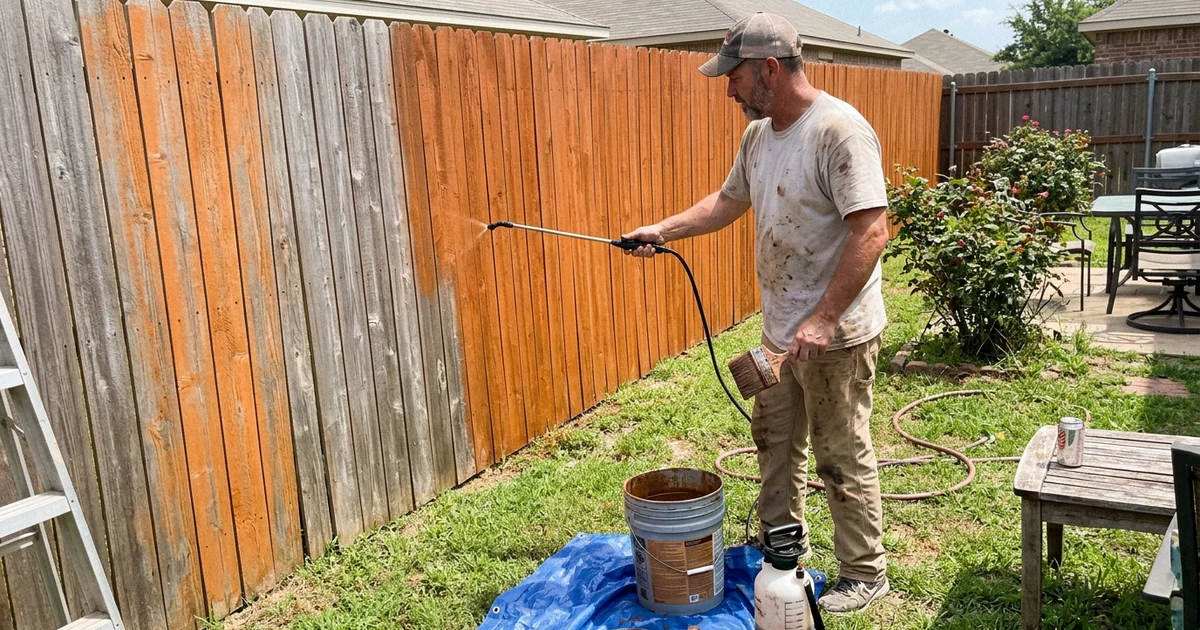
We see the same frustration from property owners every spring.
Texas heat wreaks havoc on exterior wood, making regular maintenance a frustrating expense. To help you plan, we break down our approach to Austin fence staining prices right here on our service page.
Calculating the true fence staining cost texas residents face requires looking beyond a basic tape measure. The final number changes based on the wood’s condition, the height of the pickets, and your landscaping setup. Let’s look at the current 2026 data and explore a few practical ways to keep your budget under control.
How Staining Is Priced
Pricing is mostly labor, and contractors typically charge by the linear foot for vertical structures and by the square foot for flat surfaces. You can expect an average 150-foot backyard fence to run anywhere from $700 to $2,000 for a standard job.
We rely on this linear footage method because it provides a reliable baseline for scheduling our crews. Homewyse data for 2026 shows base materials and labor starting around $1.38 to $2.76 per square foot, but linear pricing remains the Texas standard.
Fence Pricing: Per Linear Foot
A standard six-foot pine or cedar fence usually costs $3.50 to $5.50 as a fence staining price per linear foot for one side. That base rate gets adjusted quickly based on the specific dimensions and style of your project. Our teams measure the total length and then factor in the surface complexity.
- Height. An 8-foot fence has a third more surface area than a 6-foot fence, pushing prices closer to $6.00 or $7.00 per foot.
- Style. Board-on-board designs and horizontal slats increase the total wood surface area by up to 30% compared to flat side-by-side pickets.
- One side or both. Covering both sides of a shared property line nearly doubles the required material.
- Gates, posts and caps. Custom lattice tops and multiple gate frames require tedious brushwork that slows down application.
Deck Pricing: Per Square Foot
Your total deck staining cost will typically range from $3.04 to $6.28 per square foot depending on the condition of the boards. Contractors measure the flat floor area first before adding charges for vertical features. We evaluate the entire footprint to calculate exact gallon coverage estimates.
Extra charges apply for the following features:
- Railings and balusters, which demand slow, careful brush application.
- Stairs, which take heavier foot traffic and often require extra coats.
- Built-in benches and planters, which act like custom furniture.
- Height and access, such as elevated platforms on sloped backyards.
What Drives Staining Cost
The condition of the wood and the layout of the property dictate how long a job will take. Simple, open yards cost significantly less than complex lots with heavy vegetation. We encounter five main variables that push the price up or down on daily jobs.
Cleaning and Brightening
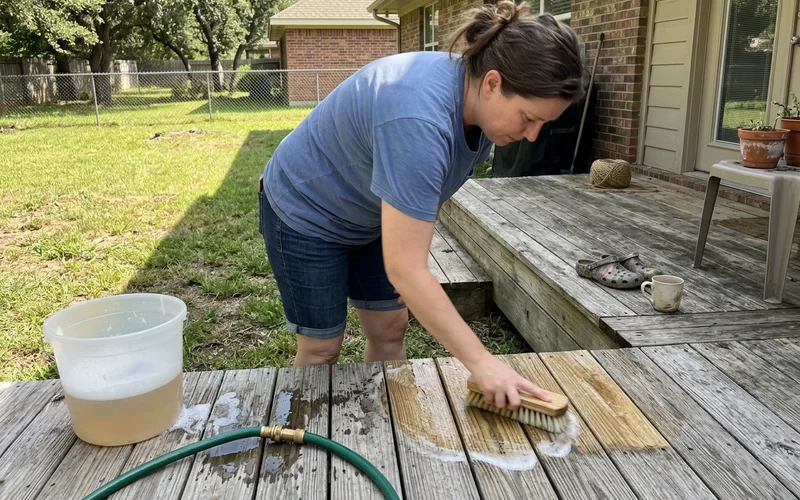
Professional power washing and chemical treatments typically add $0.20 to $0.40 per square foot to the total bill. Old wood requires this deep cleaning to strip away gray, weathered fibers and stubborn mildew. Our prep process includes a sodium percarbonate cleaner and an oxalic acid brightener on every single job. This crucial step restores the natural color and opens the wood grain to accept the new finish.
Repairs
Loose pickets, popped nails, and wobbly posts must be fixed before any liquid touches the wood. Pine pickets often split and degrade after 8 to 10 years in the intense sun, requiring immediate replacement. We flag these minor fixes during the initial walk-through to keep the project moving safely. Heavy rot or extensive damage might require calling in a dedicated fencing contractor first.
Stain Type
Contractors heavily favor penetrating oil-based products like Ready Seal or TWP 100 Series for extreme Southern heat. These formulas handle UV rays beautifully and resist the peeling common with cheaper products. Our guide on stain types compares the three main options in detail.
- Semi-transparent: This option applies quickly, shows the grain, and costs the least in labor.
- Solid: Heavy pigment acts like a paint and hides flaws, but it requires meticulous surface preparation.
- Penetrating oil: These high-grade mixtures soak deep into dry wood to prevent moisture lock-in.
Access and Landscaping
Fences hidden behind dense shrubbery, tight zero-lot lines, or steep slopes take significantly longer to spray. Clearing vines or setting up drop-cloths next to a swimming pool adds one to two hours of manual labor. We protect nearby plants and patios carefully, which naturally increases the setup fee. A clear, open yard with trimmed grass keeps the final invoice as low as possible.
Previous Coatings
Switching from a failing, chipped solid color to a fresh semi-transparent look requires complete chemical stripping. This intense removal process can easily add $600 or more to the labor costs on a standard property. Our crews spend an entire day just applying commercial-grade strippers and scrubbing old pigment out of the grain. Bare wood or a lightly faded coat requires drastically less preparation time.
Cost Drivers at a Glance
This table breaks down the typical variables and how they impact standard 2026 pricing. Reviewing these factors helps clarify why two yards with identical perimeters receive different quotes.
| Driver | Lower Cost Scenario | Higher Cost Scenario | Typical Texas Impact |
|---|---|---|---|
| Fence height | Standard 6 feet | Tall 8 feet | Adds 30% to base rate |
| Sides | One side facing yard | Both sides of property line | Adds 80% to labor cost |
| Fence style | Basic side-by-side pickets | Board-on-board or horizontal | Requires 30% more product |
| Wood condition | New cedar under 1 year old | Gray, splitting, or heavy mildew | Adds $0.20-$0.40 per sq ft for prep |
| Repairs | Fully intact framing | Missing boards, leaning posts | Billed hourly plus materials |
| Deck extras | Flat flooring only | Multiple stairs and custom railings | Slows application by 50% |
| Previous finish | Faded oil-based stain | Peeling solid acrylic paint | Requires full-day chemical strip |
One Side or Both?
The cost to stain fence both sides generally adds about 80% to your baseline labor estimate. Many property owners only treat the surface facing their yard to save money. We often recommend coordinating with your neighbor to split the expense of treating the shared boundary line.
If the neighbor’s side remains bare, that wood will continue to turn gray and pull moisture into the structure. Treating the entire property line at once saves everyone from paying duplicate setup fees.
Pairing With an Exterior Repaint
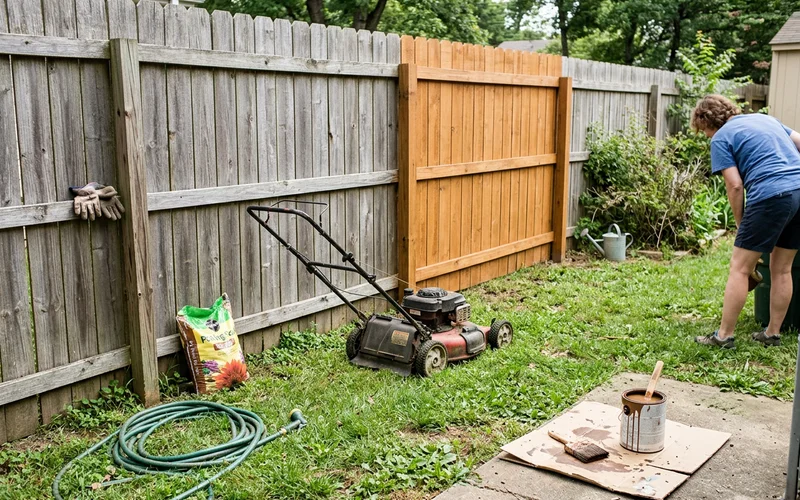
Rolling your yard structures into a full exterior house repaint eliminates the need for separate mobilization fees. A professional painting crew in cities like Austin charges around $30.57 per hour for loaded labor. We save time and materials when we can wash and spray the siding, deck, and boundary lines in a single visit. Keeping everything on one contract ensures all exterior colors match perfectly and look fresh together.
What Your Quote Should Include
A reliable estimate specifies exact gallon coverage rates and lists all expected hourly labor charges. Transparent paperwork prevents surprise bills when the job takes longer than expected. We provide highly detailed, written proposals that outline every single step of the process.
You should look for these specific line items before signing any agreement:
- Exact measurements and clear indication of one side or both sides.
- Sodium percarbonate cleaning, brightening, and minor repair steps.
- Exact stain brand, base type, and a specified warranty period.
- Plant, pool, and patio drop-cloth protection plans.
- A clear schedule and an alternative weather plan.
DIY vs Professional Staining
Tackling the job yourself requires renting equipment like a Graco X7 airless sprayer and buying expensive materials. The raw cost for 5 to 10 gallons of premium product alone frequently exceeds $400. We regularly rescue DIY projects after homeowners spend 16 grueling hours in the summer heat trying to back-brush rough cedar.
Professional crews bring commercial sprayers and extensive experience, finishing the entire boundary line in a single day. Hiring an expert guarantees a consistent, streak-free result for a clear, fixed price.
How Often You’ll Pay for Staining
Most boundary lines facing the harsh Southern sun need a fresh coat every three to five years. Horizontal deck surfaces take direct UV hits and heavy foot traffic, meaning they require recoating every one to two years.
We help clients establish a predictable maintenance schedule so their wood never reaches the gray, rotting stage. Choosing an oil-based product and rinsing off seasonal pollen stretches the timeline between expensive restorations.
What Makes One Fence Faster Than Another
Standard, flat-topped pine pickets absorb liquid uniformly and allow a sprayer to move rapidly down the line. Complex designs with custom trim force the applicator to stop and rely on a hand brush. We price each job based on an in-person visual inspection rather than relying strictly on an overhead satellite measurement.
Faster, lower-cost jobs typically feature:
- Open, clear access from both sides.
- Zero complicated gates or hardware.
- Basic side-by-side construction.
- Wood under a year old with moisture below 15%.
Slower, expensive jobs feature heavy climbing vines, sloped retaining walls, and decorative post caps. Rough, mildew-covered wood requires multiple passes, drastically reducing the speed of application.
Getting the Most From Your Staining
Routine maintenance prevents hard water stains and stops mildew from taking root in the grain. A quick inspection each spring catches small issues before they become expensive structural failures. We strongly encourage clients to practice a few simple habits to protect their investment.
Follow these specific rules to make your finish last longer:
- Keep sprinklers off the wood. Constant water exposure causes rapid decay and calcium buildup.
- Trim plants back. Vines and bushes block airflow, trapping destructive moisture.
- Rinse off dirt and pollen. Use a standard garden hose on a gentle setting each spring.
- Do the water-beading test. Splash water on the surface, and if it immediately soaks in, the sealant is failing.
- Recoat before the wood turns gray. Maintenance coats cost a fraction of a full chemical strip and restore.
Fence Staining Timing and Weather
Applying product requires a dry, mild day with temperatures staying between 50°F and 90°F. If the boards are too hot, the liquid flash-dries on contact and fails to penetrate the grain. We watch the local radar closely because the wood must dry for a full 48 hours after a heavy thunderstorm.
The best value for your fence staining cost texas budget happens during the mild spring and fall months. Working around the unpredictable weather ensures the finish cures properly and lasts for years.
Get a Fixed Price
Guessing at your final fence staining cost texas bill is stressful and unnecessary.
A quick, professional inspection removes the guesswork and gives you a clear path forward. We provide an exact measurement, check the wood’s moisture content, and recommend the best oil-based product for your yard.
Get a staining quote today, and a team member will be out to evaluate your property within 48 hours.